When you manage a large-scale access control, transportation, or customer loyalty project, choosing the right card supplier directly affects your operating costs and system reliability. An rfid tags bulk order gives you a practical way to source consistent cards, simplify procurement, and meet the requirements of multiple business locations.
However, not every RFID card supports the same frequency, chip type, or reader configuration. You need to evaluate material quality, memory capacity, programming capabilities, and customization options before placing a large order. Apmor RFID Technology Co., Ltd. provides RFID card solutions designed to support different industry requirements, including custom PVC cards with magnetic stripe processing options.
What Is a Magnetic Stripe RFID Card?
A magnetic stripe card stores information on a magnetic strip, while an RFID card communicates with compatible readers through radio frequency technology. These technologies serve different purposes, but a card can incorporate multiple identification features when its design and specifications support them.
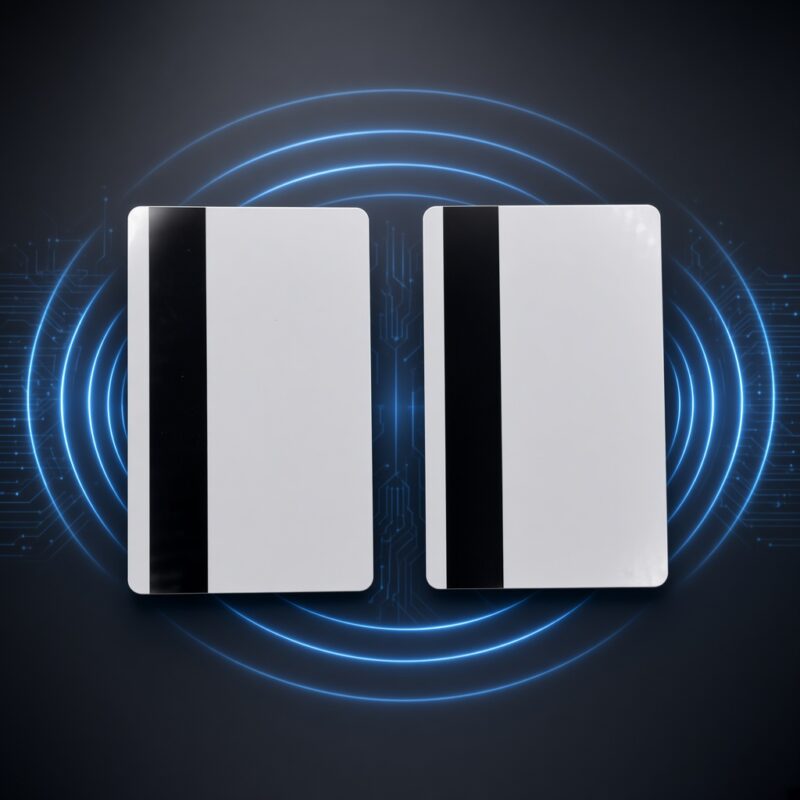
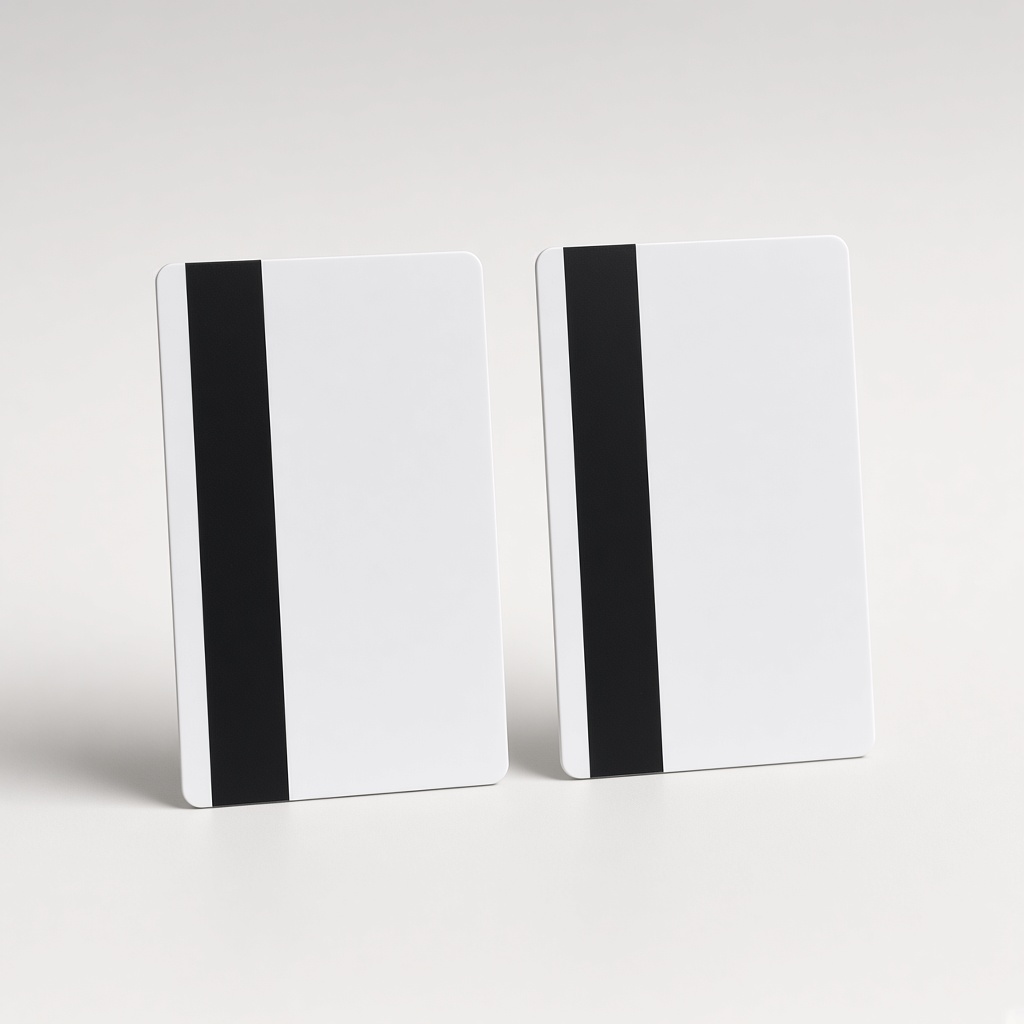
The Magnetic Stripe Card offered by Apmor RFID uses PVC as its listed base material and supports several RFID chip options. Its product specifications also list magnetic stripe processing, thermal printing, hot stamping, barcodes, serial numbers, and UID numbers.
This combination gives buyers flexibility when planning identification and payment-related card applications.
Key Product Specifications
| Specification | Product Details |
|---|---|
| Product type | RFID Card |
| Material | PVC |
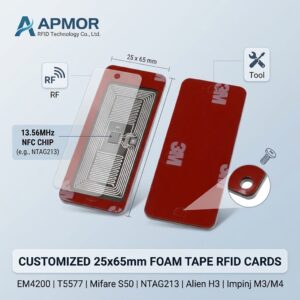
| Available chips | EM4200, T5577, MIFARE S50, NTAG213, Alien H3, Impinj M3/M4, etc. |
| Listed frequency | 125 kHz |
| Standard size | 86 × 54 mm |
| Customization | Customized sizes available |
| Data retention | 10 years |
| Programming cycles | ≥100,000 |
| Memory options | 144 bytes, 1 KB, 128 bytes, etc. |
| Reading range | 0–5 m, depending on reader and antenna |
| Product crafts | Hot stamping, thermal printing, magnetic stripe, barcode, serial number, UID |
The listed chip models cover different RFID frequency technologies. The 125 kHz specification should not be assumed to apply to every available chip. Confirm the exact chip, operating frequency, memory configuration, and magnetic stripe requirements before ordering.
Why Choose RFID Tags Bulk Order for Your Business?
Purchasing RFID cards in bulk can help you maintain consistent product specifications and simplify supply chain management. This approach is particularly useful when your business needs to issue hundreds or thousands of cards across different locations.
The main advantages include:
- More consistent specifications: Standardizing card materials, chip models, and printing requirements helps maintain compatibility across your project.
- Procurement efficiency: Consolidating purchases reduces repeated supplier communication and simplifies inventory planning.
- Flexible customization: You can select printing methods, barcodes, serial numbers, UID information, and other available card features.
- Multiple application options: RFID cards can support identification, access management, transportation, and customer loyalty systems.
- Long-term usability: The listed specifications include 10-year data retention and at least 100,000 programming cycles, subject to the selected chip and operating conditions.
For distributors, system integrators, and commercial project contractors, these features make bulk RFID card procurement easier to manage.
Magnetic Stripe Card vs. Standard RFID Card
Before placing an order, you should understand the differences between magnetic stripe and RFID technologies. Your choice depends on the existing equipment, identification requirements, and intended application.
| Comparison | Magnetic Stripe Card | Standard RFID Card |
|---|---|---|
| Communication | Magnetic stripe reading | Radio frequency communication |
| Reading method | Physical contact or swiping | Contactless scanning |
| Data technology | Magnetic data encoding | Chip-based data storage |
| Equipment | Magnetic stripe reader | Compatible RFID reader |
| Typical applications | Legacy access and card systems | Access control, transportation, and identification |
| Key consideration | Magnetic stripe format and reader compatibility | Frequency and chip compatibility |
If your project uses existing magnetic stripe readers, you should verify the card’s magnetic encoding specifications. If you need contactless identification, select an RFID chip compatible with your reader.
For projects requiring both functions, ask your supplier to confirm whether the requested magnetic stripe and RFID features can be integrated into the same card.
How to Place an RFID Tags Bulk Order
A structured purchasing process helps you avoid compatibility problems and unnecessary production costs.
Follow these five steps when sourcing custom RFID cards:
- Define your application: Identify whether you need cards for public transportation, loyalty programs, event ticketing, car parking, or access management.
- Confirm technical requirements: Specify the operating frequency, chip model, memory capacity, reading distance, and reader compatibility.
- Select card customization: Choose the PVC card size, magnetic stripe requirements, printing method, barcode, serial number, and UID options.
- Request a product sample: Test the sample with your existing readers and verify data encoding, reading performance, and physical quality.
- Confirm bulk order specifications: Finalize the product configuration, quantity, packaging, and delivery arrangements before approving production.
Following these steps allows you to evaluate suppliers based on technical suitability rather than price alone.
Applications of Custom Magnetic Stripe and RFID Cards
RFID cards support a range of commercial identification and management scenarios. Apmor RFID lists several applications for its card products:
- Public transportation: Cards can support passenger identification and compatible ticketing systems.
- Loyalty programs: Retailers can use personalized cards to identify customers and manage membership records.
- Event ticketing: RFID-enabled cards can help organize attendee identification and entry management.
- Car parking: Compatible RFID cards can support vehicle access and parking management systems.
You should match the card’s chip technology to the infrastructure used in your application. For example, a 125 kHz reader cannot automatically communicate with a high-frequency or UHF card.
Why Source RFID Cards from Apmor RFID?
Founded on October 24, 2022, Apmor RFID Technology Co., Ltd. specializes in RFID tags and smart card solutions. The company focuses on technological innovation, product customization, and integrated services for customers across different industries.
Its service advantages include:
- Customized products: Card specifications and available manufacturing processes can be selected according to project requirements.
- Technical support: Assistance with product selection and RFID technology requirements.
- Quality-focused production: Attention to product reliability and durability.
- Global supply chain services: Support for international customers and procurement requirements.
- After-sales service: Assistance throughout the customer service process.
Apmor RFID reports a team of more than 50 people and serves customers in 10 countries. These company figures provide additional background when evaluating a potential RFID card supplier.
Although the company emphasizes product quality, buyers should request relevant quality inspection records and applicable certifications when these are required for their projects.
FAQ
1. What information should you provide for an RFID tags bulk order?
You should provide the required chip model, operating frequency, card dimensions, memory capacity, printing requirements, magnetic stripe specifications, and estimated order quantity. These details help the supplier recommend a suitable configuration.
2. Can RFID cards include both a magnetic stripe and an RFID chip?
Yes, a card can be designed to incorporate both technologies. However, you should confirm the specific product configuration with the manufacturer to ensure that the magnetic stripe and RFID functions are both supported.
3. How do you choose the right RFID chip for bulk purchasing?
Start by checking your reader’s operating frequency and supported protocols. Then compare chip memory, reading requirements, programming functions, and application compatibility. Testing a sample before approving mass production is recommended.
Conclusion
Choosing the right supplier for an rfid tags bulk order requires more than comparing unit prices. You should evaluate chip compatibility, card materials, customization options, technical specifications, and supplier support to ensure that your cards meet actual project requirements.
With its focus on RFID technology, customizable card solutions, and global customer service, Apmor RFID Technology Co., Ltd. offers an option for businesses sourcing PVC RFID cards and magnetic stripe card products for commercial applications.
Contact Apmor RFID to discuss your bulk card requirements, confirm available chip configurations, and request a customized quotation for your next project.




Add comment