When you need RFID tags blank for access control, identification, or customer management, choosing the right tag involves more than selecting a chip. You also need to consider operating frequency, memory capacity, reading distance, durability, and compatibility with existing RFID readers. An unsuitable tag can cause reading failures, increase replacement costs, and disrupt daily operations.
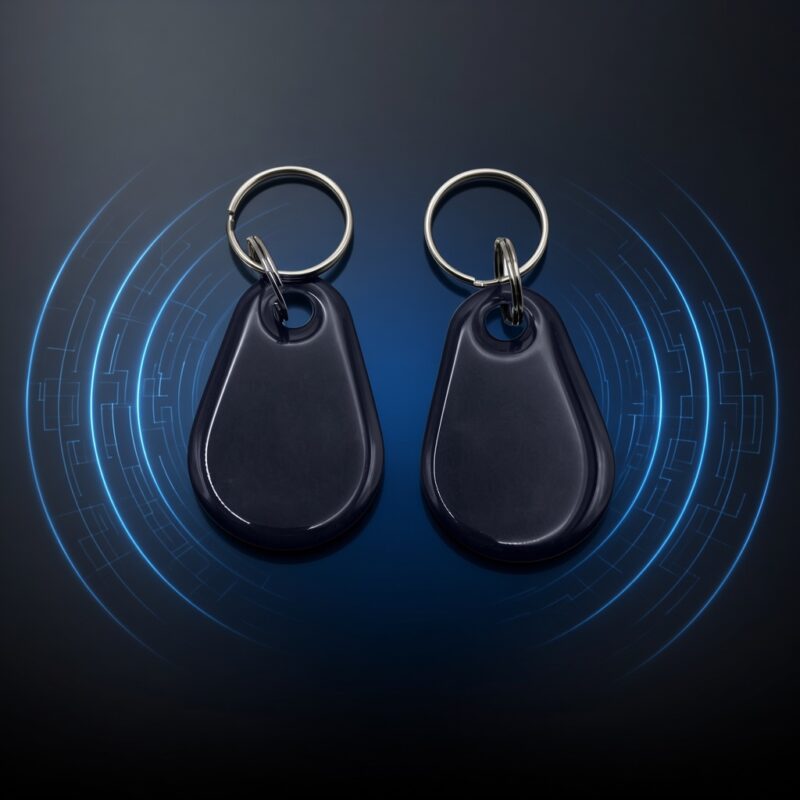
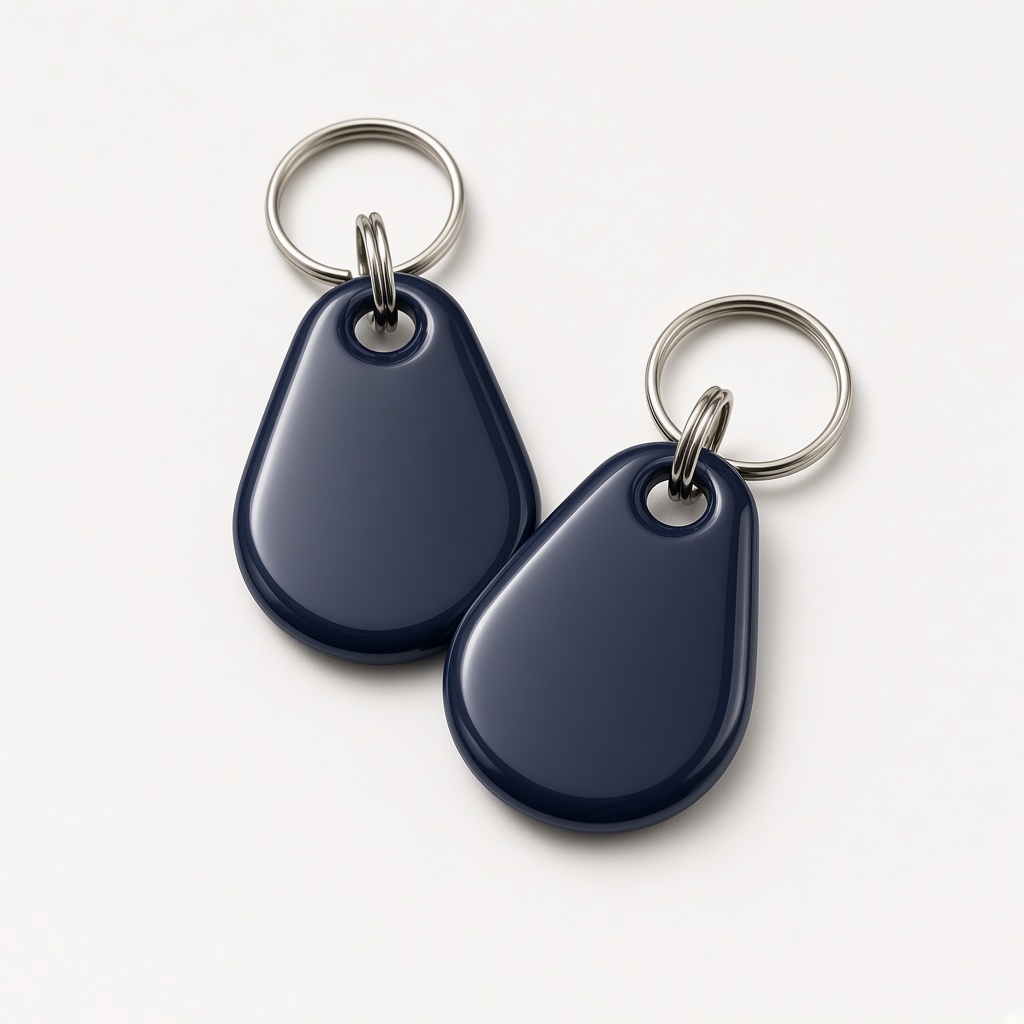
A keyfob-shaped HF epoxy card with a metal key ring offers a compact alternative to traditional RFID cards. Apmor RFID Technology Co., Ltd. provides customizable RFID products designed for different business applications, helping you select suitable chip configurations, dimensions, and printing options for your project.
What Are RFID Tags Blank and How Do They Work?
RFID tags blank are unencoded or unpersonalized RFID products that allow businesses to program identification data according to their operational requirements. They contain an RFID chip and antenna that communicate with compatible readers through radio frequency signals.
Unlike printed identification cards, blank RFID tags can support electronic identification without requiring direct physical contact with a reader.
For a keyfob application, the RFID component is integrated into a compact housing with a metal key ring. You can attach it to keys, bags, employee accessories, or other frequently used items.
Common characteristics include:
- Flexible identification: Assign unique IDs to individual users, assets, or access credentials.
- Contactless operation: Exchange information with compatible RFID readers.
- Customizable appearance: Add serial numbers, barcodes, logos, or other identification details.
- Compact design: Carry the keyfob conveniently without handling a full-size card.
Key Features of Apmor HF Epoxy RFID Keyfobs
Apmor’s keyfob-shaped HF epoxy card combines RFID functionality with a practical key ring design. It is suitable for businesses that need portable identification products and customized RFID credentials.
1. 13.56 MHz HF Frequency
The product specification lists an operating frequency of 13.56 MHz, which belongs to the high-frequency RFID category.
HF RFID technology is commonly used in access control, loyalty programs, public transportation, and event management. However, you should check reader compatibility before ordering because different RFID standards and chip types may require different readers.
2. Multiple Chip Options
Apmor provides several chip options for different RFID product configurations, including:
- MIFARE S50
- NTAG213
- EM4200
- T5577
- Alien H3
- Impinj M3/M4
These options cover different identification and application requirements. However, not every chip operates at 13.56 MHz. For example, EM4200 and T5577 are typically LF chips, while Alien H3 and Impinj M3/M4 belong to the UHF category.
Therefore, confirm the exact chip model and frequency combination with Apmor before placing your order.
3. Customizable Size and Appearance
The listed standard dimensions are 45 × 35 × 1 mm, with customized sizes also available.
You can discuss additional product customization options, including:
- Hot stamping
- Thermal printing
- Barcode and serial number printing
- UID number identification
- Custom product dimensions
These options help you organize different credentials and maintain consistent identification across your business operations.
4. Memory and Programming Performance
The product specification provides several memory configurations, including 128 bytes, 144 bytes, and 1 KB.
Other listed performance parameters include:
| Specification | Product Details |
|---|---|
| Frequency | 13.56 MHz (listed specification) |
| Material | PVC (listed specification) |
| Size | 45 × 35 × 1 mm / Customized |
| Data retention | 10 years |
| Programming cycles | ≥100,000 |
| Memory options | 128 bytes, 144 bytes, 1 KB, etc. |
| Reading range | 0–5 m, depending on reader and antenna |
| Customization | Printing, barcode, serial number, UID |
The actual reading range depends on the selected chip, antenna design, reader, and installation environment. You should request configuration-specific specifications before finalizing your technical requirements.
Blank RFID Tags vs. Custom RFID Keyfobs
Choosing between blank RFID tags and customized keyfobs depends on how you plan to distribute, identify, and manage your credentials.
| Comparison | Standard Blank RFID Tags | Custom RFID Keyfobs |
|---|---|---|
| Appearance | Basic tag format | Keyfob-shaped design |
| Identification | Requires separate identification methods | Supports printed identifiers |
| Portability | Depends on tag design | Metal key ring for convenient carrying |
| Customization | Depends on product type | Size and printing options |
| Applications | General RFID identification | Access control, loyalty and parking |
| User convenience | Varies by format | Easy to attach to personal belongings |
If you distribute credentials to employees, customers, or visitors, a keyfob design can simplify daily handling. Meanwhile, standard blank tags may suit projects that prioritize basic identification and integration into existing products.
Where Can You Use HF RFID Keyfobs?
The combination of contactless identification and portable design makes these keyfobs suitable for several practical scenarios.
1. Access Control Systems
You can assign individual RFID keyfobs to employees or authorized visitors. Compatible readers identify the credentials and communicate with the access management system to determine whether entry is permitted.
2. Public Transportation
Transportation operators can use compatible RFID credentials for passenger identification and ticketing. The keyfob format provides an alternative to conventional cards for users who prefer attaching credentials to their keys.
3. Loyalty and Membership Programs
Retailers, gyms, and service businesses can issue RFID keyfobs to registered members. Staff can use compatible readers to retrieve membership information and support customer identification.
4. Event Ticketing
Event organizers can distribute RFID keyfobs as reusable identification credentials. Depending on the system configuration, they can support participant verification and access management.
5. Car Parking Management
Parking operators can integrate compatible RFID keyfobs into vehicle access systems. Each credential can be associated with an authorized user or parking account.
How to Choose and Order RFID Tags Blank
Before purchasing blank RFID tags for your project, follow these steps to avoid compatibility problems and unnecessary costs.
- Define your application: Determine whether you need access control, transportation, loyalty management, or parking identification.
- Confirm the frequency: Identify whether your reader requires LF, HF, or UHF technology.
- Select the chip: Choose a compatible chip based on memory requirements, reading performance, and system protocols.
- Determine customization: Confirm the required dimensions, printing method, barcode, serial number, and UID information.
- Request a sample: Test the keyfob with your actual reader and software before approving bulk production.
- Confirm production details: Discuss quantities, encoding requirements, packaging, and delivery arrangements with your supplier.
Following this process helps you select RFID products that match your existing infrastructure rather than relying on specifications alone.
FAQ
1. Can blank RFID tags be programmed?
Yes. Programmable RFID tags can store identification information through compatible encoding equipment. However, writable memory, access permissions, and programming methods depend on the selected chip.
2. What is the reading distance of HF RFID keyfobs?
The listed reading range for this product is 0–5 meters, depending on the reader and antenna. Actual performance varies with chip type, antenna design, reader power, and surrounding materials. Confirm the expected range through sample testing.
3. Can I order custom RFID keyfobs in bulk?
You can contact Apmor RFID to discuss customized dimensions, chip configurations, printing requirements, and bulk purchasing. Confirm the minimum order quantity, production lead time, and available customization options directly with the supplier.
Conclusion
Choosing RFID tags blank requires careful consideration of frequency compatibility, chip specifications, memory capacity, and intended applications. A keyfob-shaped HF epoxy card with a metal key ring provides a portable identification option for access control, public transportation, loyalty programs, event ticketing, and parking management.
Apmor RFID Technology Co., Ltd. specializes in RFID labels and smart cards, offering customized product options and technical support for different business requirements. By confirming your reader compatibility and customization needs before ordering, you can select an RFID solution that supports reliable identification and efficient daily operations.
Looking for customized blank RFID keyfobs?
Contact Apmor RFID to discuss your target chip, operating frequency, dimensions, printing requirements, and order quantity. Request a product sample and technical specifications to evaluate compatibility with your RFID system before starting bulk production.


Add comment