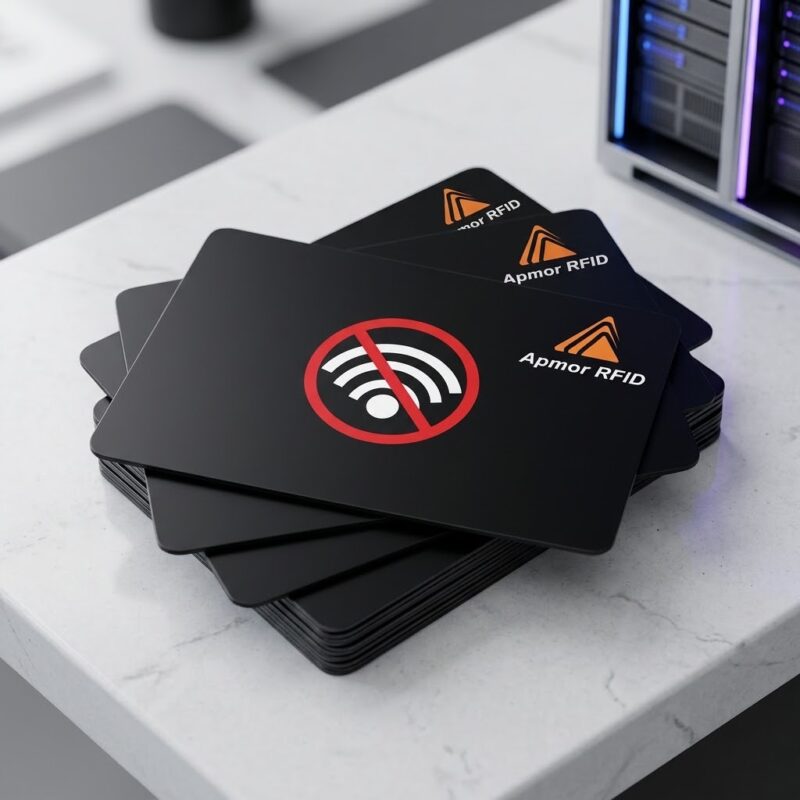
RFID card blocking helps address a common concern: unauthorized wireless reading of contactless cards. If you carry contactless bank cards, access cards, or other RFID-enabled credentials, you may want an additional layer of protection against unwanted scanning. However, effective protection depends on the blocking card’s design, the frequencies it supports, and how it interacts with nearby cards and readers.
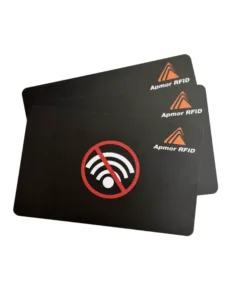
For businesses sourcing RFID security products, choosing the right supplier also matters. Apmor RFID Technology Co., Ltd., established on October 24, 2022, specializes in RFID labels and smart cards. Its RFID Blocking Card is designed for privacy protection applications, with material and size options that support different product requirements. Before purchasing, you should understand its intended use, technical specifications, and customization possibilities.
What Is RFID Card Blocking?
RFID card blocking refers to methods designed to prevent or interfere with unauthorized RFID communication between a card and a reader. A properly designed blocking card can help protect compatible contactless cards when placed in the appropriate position.
For example, you might carry a contactless payment card in your wallet while commuting, shopping, or traveling. A compatible blocking solution may reduce the risk of unwanted reading under suitable conditions.
However, RFID card blocking does not automatically protect every frequency or every card type. You should confirm the supported frequency range and verify performance through testing before relying on a product for security-sensitive applications.
Apmor RFID Blocking Card: Product Specifications
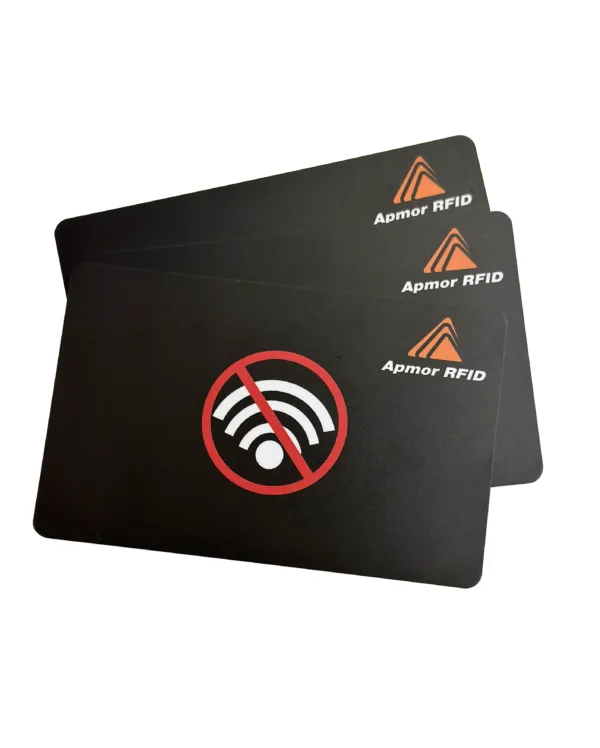
Apmor RFID provides an RFID Blocking Card for credit card protection and privacy protection applications. Its listed specifications offer a starting point for evaluating product compatibility and customization requirements.
| Specification | Available details |
|---|---|
| Product | RFID Blocking Card |
| Materials | PVC, PET, PPS |
| Standard size | 86 × 54 mm |
| Customization | Customized sizes available |
| Listed frequencies | 125 kHz, 13.56 MHz, 860–960 MHz |
| Available chip options | FM11RF08, NXP S70, NXP Ultralight, NTAG213, I-Code 2, among others |
| Listed reading range | 0–5 m, depending on the reader and antenna |
| Applications | Credit card protection and privacy protection |
The listed frequencies and chip options do not, by themselves, establish the card’s blocking performance. Chip compatibility, RFID operating frequency, and shielding capability are different technical considerations. Ask Apmor RFID to confirm which frequencies the blocking card actually supports and request test results for the intended application.
Key Benefits of RFID Card Blocking Solutions
1. Additional Contactless Card Protection
RFID card blocking products are designed to help limit unwanted communication with compatible contactless cards. This can be useful for consumers who carry payment cards or businesses developing privacy-focused accessories.
The actual level of protection depends on the product design, card placement, reader strength, and operating frequency.
2. Flexible Material and Size Options
Apmor RFID lists PVC, PET, and PPS as available materials, with a standard card size of 86 × 54 mm and customized sizes also available.
When selecting a material, consider:
- Durability: How frequently will users carry and handle the card?
- Card thickness: Does the product need to fit inside a standard wallet?
- Appearance: Do you need custom printing, branding, or a particular finish?
- Application: Will the card be distributed individually or included in a promotional package?
Confirm the available finishes and printing options with the supplier before finalizing your order.
3. Customization for Business Requirements
If you source RFID products for retail, corporate gifting, or branded accessories, customization can help align the product with your requirements.
Apmor RFID focuses on RFID labels and smart cards and offers customized product solutions. Before placing a bulk order, confirm the minimum order quantity, sample availability, production lead time, and quality inspection process.
RFID Blocking Card vs. RFID Card Sleeve
Choosing between a blocking card and a sleeve depends on how you intend to carry and protect your cards.
| Comparison factor | RFID Blocking Card | RFID Blocking Sleeve |
|---|---|---|
| Product format | Separate card-shaped product | Protective pocket or cover |
| Typical use | Carried alongside compatible cards | Individual cards inserted inside |
| Wallet compatibility | Designed around a card format | Depends on sleeve dimensions |
| Customization | Confirm available materials and printing | Depends on the sleeve design |
| Key consideration | Placement and verified blocking performance | Fit, coverage, and verified blocking performance |
Neither format guarantees universal protection. You should compare independently verified performance, usability, and total cost before choosing a solution.
How to Choose the Right RFID Blocking Card
Follow these steps before purchasing:
- Identify your target cards. Determine whether you need protection for contactless payment cards, access credentials, or another compatible card type.
- Confirm operating frequencies. Ask the supplier to specify the frequencies tested for blocking performance rather than relying only on general RFID specifications.
- Request verification. Obtain test reports showing the test setup, reader frequency, distance, and results.
- Check physical requirements. Confirm dimensions, material, thickness, printing options, and wallet compatibility.
- Evaluate samples. Test the sample with representative cards and readers before committing to a bulk order.
- Confirm commercial terms. Discuss minimum order quantities, sample costs, production schedules, packaging, and shipping arrangements.
This process helps you compare suppliers based on measurable performance and practical purchasing requirements.
FAQ
1. Does an RFID blocking card protect every contactless card?
Not necessarily. Protection depends on the blocking card’s design, supported frequencies, placement, and test results. Ask the manufacturer to verify compatibility with your specific cards.
2. Can I order custom RFID blocking cards from Apmor RFID?
Apmor RFID lists customized sizes and several material options for its RFID Blocking Card. Contact the company to confirm available customization, printing, order quantities, and production requirements.
3. How can I verify RFID card blocking performance?
Request test reports for the relevant frequency bands and test conditions. Check whether the results demonstrate reduced or prevented communication between a compatible card and reader under the conditions you expect in actual use.
Conclusion
RFID card blocking can provide an additional layer of privacy protection when the product is designed and tested for your intended cards and operating frequencies. By evaluating materials, dimensions, compatibility, and verified performance, you can make a more informed purchasing decision. Apmor RFID Technology Co., Ltd. offers an RFID Blocking Card with PVC, PET, and PPS material options and customized sizing, giving buyers a starting point for discussing product requirements.
Contact Apmor RFID to request product samples, confirm supported frequencies, obtain available performance test reports, and discuss customized RFID blocking card specifications for your business.

Add comment