When manual inventory checks slow your operations, misplaced materials and incomplete tracking records can increase costs. RFID tag automation helps you identify, track, and manage tagged items using radio frequency identification technology, reducing dependence on manual data entry and repeated barcode scanning. For manufacturers, warehouse operators, and logistics providers, the right RFID tag can support more consistent workflows across production, storage, and transportation.
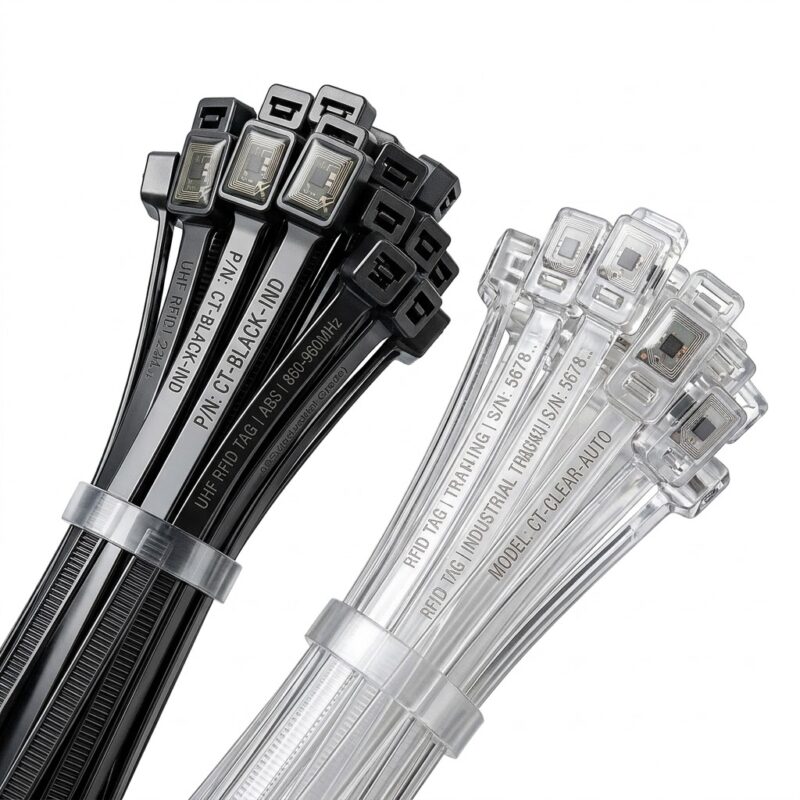
Apmor RFID Technology Co., Ltd., established on October 24, 2022, specializes in RFID labels and smart cards. Its RFID Cable-tie Tag offers a practical option for securing identification tags to materials, containers, and other items that need reliable tracking. By matching the tag’s frequency, chip, and physical design to your application, you can build an RFID tracking solution around your existing operational requirements.
How RFID Tag Automation Works
RFID tag automation uses radio waves to exchange data between an RFID tag and a compatible reader. Depending on the system configuration, readers can capture tag information and transfer it to inventory software, manufacturing systems, or logistics platforms.
Unlike a barcode that generally requires optical visibility, an RFID tag can be read without direct visual contact when the tag and reader operate within suitable conditions. This capability can help you simplify identification tasks in busy industrial environments.
A typical RFID automation system includes:
- RFID tags: Store identification data associated with materials, products, or containers.
- RFID readers and antennas: Detect compatible tags within the configured reading area.
- Management software: Connects collected tag data with inventory, production, or logistics records.
- Workflow rules: Trigger actions such as updating stock records, recording movements, or flagging unexpected item locations.
The results depend on reader configuration, tag placement, environmental conditions, and software integration.
Why Choose an RFID Cable-tie Tag for Automation?
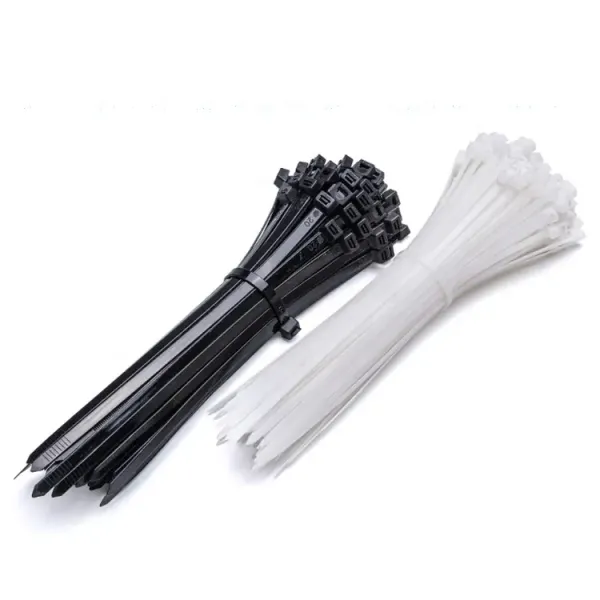
Traditional labels may be difficult to attach securely to irregular objects, reusable containers, or bundled materials. An RFID cable-tie tag combines an identification tag with a fastening structure, making it suitable for applications where you need to attach tracking information directly to an item.
Apmor RFID offers cable-tie tags made from ABS, nylon, or PC, depending on the selected product configuration. Available lengths include 200 mm, 330 mm, 345 mm, and 445 mm, with customized sizes also listed.
Key Product Specifications
| Specification | Available details |
|---|---|
| Product type | RFID Cable-tie Tag |
| Materials | ABS / Nylon / PC |
| Frequency | 13.56 MHz / 860–960 MHz |
| Available chips | Alien H3/H4, Impinj M4/M5, I-Code SLIX, NTAG213, Ultralight EV1, MIFARE 1K, and others |
| Memory | 128 bytes, 144 bytes, 1 KB, and other options |
| Data retention | Listed as 10 years |
| Programming cycles | Listed as ≥100,000 |
| Reading range | 0–5 m, depending on the reader and antenna |
| Available lengths | 200 mm, 330 mm, 345 mm, 445 mm, and customized options |
| Product features | Waterproof construction and UID number options |
These specifications describe the available product configurations rather than a single universal version. Confirm chip compatibility, memory, environmental protection, and operating performance with Apmor RFID before ordering.
HF vs. UHF: Which Frequency Fits Your Workflow?
Frequency selection directly affects how your RFID tag automation system operates.
| Factor | HF RFID | UHF RFID |
|---|---|---|
| Frequency | 13.56 MHz | 860–960 MHz |
| Common use cases | Item identification and compatible access systems | Inventory tracking, logistics, and container identification |
| Reading range | Generally shorter and application-dependent | Can support longer-range reading under suitable conditions |
| Selection priority | Reader compatibility and close-range identification | Read distance, movement speed, and identification volume |
For warehouse inventory or production line automation, UHF may be appropriate when your workflow requires longer reading distances. HF may suit applications built around compatible short-range readers. Neither option guarantees a particular reading range in every environment.
RFID Tag Automation Applications
1. Warehouse and Inventory Management
Attach cable-tie tags to reusable containers, storage bins, or selected inventory items. Compatible readers can help staff identify tagged assets and update inventory records without relying entirely on manual scanning.
For example, a warehouse can associate each tagged container with a stock record, allowing employees to verify item movements at designated checkpoints.
2. Production Line Automation
Manufacturers can associate RFID tag IDs with work orders, component batches, or production containers. When a compatible reader detects a tag at a workstation, the system can retrieve the corresponding production record.
This approach supports process visibility and helps operators identify materials as they move between production stages.
3. Logistics and Container Tracking
Cable-tie tags can identify reusable transport containers, material bundles, and selected logistics assets. At configured checkpoints, RFID readers can capture tag IDs and send movement events to a connected tracking platform.
However, reading a tag does not automatically provide GPS location. You need appropriately positioned readers and integrated software to record movements across your logistics network.
4. Access Control and Asset Identification
You can also use compatible RFID configurations for asset identification or selected access-control applications. Before deployment, verify that the chip type, reader frequency, data format, and security requirements match your existing system.
How to Implement RFID Tag Automation
Follow these steps to select and deploy an appropriate RFID cable-tie tag solution.
- Define your tracking objective. Decide whether you need inventory visibility, production-stage identification, container tracking, or asset management.
- Choose the frequency and chip. Match the HF or UHF configuration to your reader infrastructure, required data capacity, and operating environment.
- Select the cable-tie size and material. Consider the attachment point, object dimensions, fastening requirements, and exposure to moisture or other environmental conditions.
- Test reading performance. Evaluate the tags with your actual readers, antennas, mounting positions, and representative materials. Metal surfaces and nearby liquids can affect performance.
- Integrate your software. Map each tag’s unique identifier to the relevant inventory or production record, then configure the required tracking events.
- Run a pilot before scaling. Measure read accuracy, missed reads, workflow efficiency, and maintenance requirements before deploying tags throughout your operation.
FAQ
1. What is an RFID tag used for in automation?
An RFID tag identifies an item so compatible readers and software can record its presence or movement. Common applications include inventory management, production tracking, logistics, and asset identification.
2. How far can an RFID cable-tie tag be read?
Apmor RFID lists a reading range of 0–5 m, depending on the reader and antenna. Actual performance varies with frequency, tag orientation, installation conditions, and the surrounding materials.
3. Can RFID cable-tie tags be customized?
Apmor RFID lists multiple cable-tie lengths and material options, including customized sizes. Contact the supplier to confirm available chip configurations, frequency, memory, fastening dimensions, and environmental requirements for your project.
Conclusion
Effective rfid tag automation starts with selecting tags that match your identification requirements, reader infrastructure, and operating environment. Apmor RFID’s cable-tie tags offer configurable frequency, chip, material, and size options for inventory tracking, production workflows, and logistics applications. By testing the selected configuration before deployment, you can determine whether it meets your operational needs and supports a more organized tracking process.
CTA: Plan Your RFID Tracking Solution
Contact Apmor RFID to discuss your application, required cable-tie length, HF or UHF frequency, chip selection, and expected reading distance. Share your reader model and installation environment to help the team recommend a suitable configuration for your RFID automation project.


Add comment