When you buy RFID card products, choosing the wrong card type can cause compatibility problems, short reading distances, or unnecessary customization costs. You need a card that matches your reader, frequency, memory requirements, printing needs, and application environment.
Apmor RFID Technology Co., Ltd. provides PVC RFID cards with magnetic stripe, barcode, serial number, UID number, and customized printing options. The company was founded on October 24, 2022, in Shenzhen, China, and focuses on RFID labels and smart card solutions. With a team of 48+ people and products serving 9 countries, Apmor RFID supports customized RFID requirements for transportation, loyalty programs, event ticketing, parking, and access control.
What to Check Before You Buy RFID Card Products
Before you place an order, you should confirm the technical specifications rather than choosing a card based only on appearance.
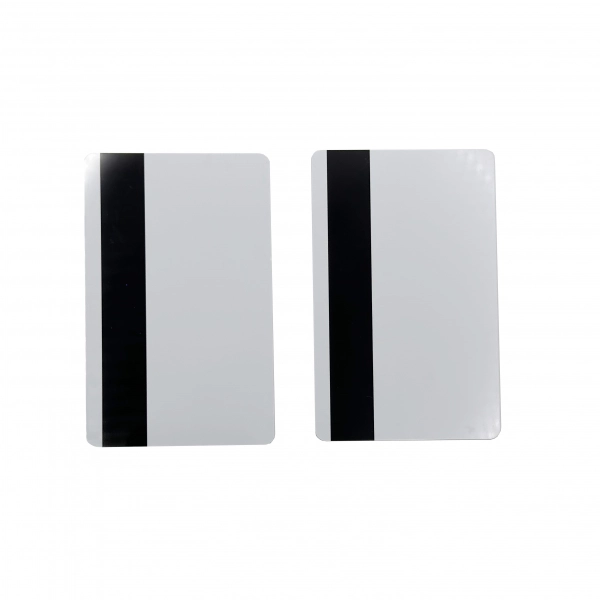
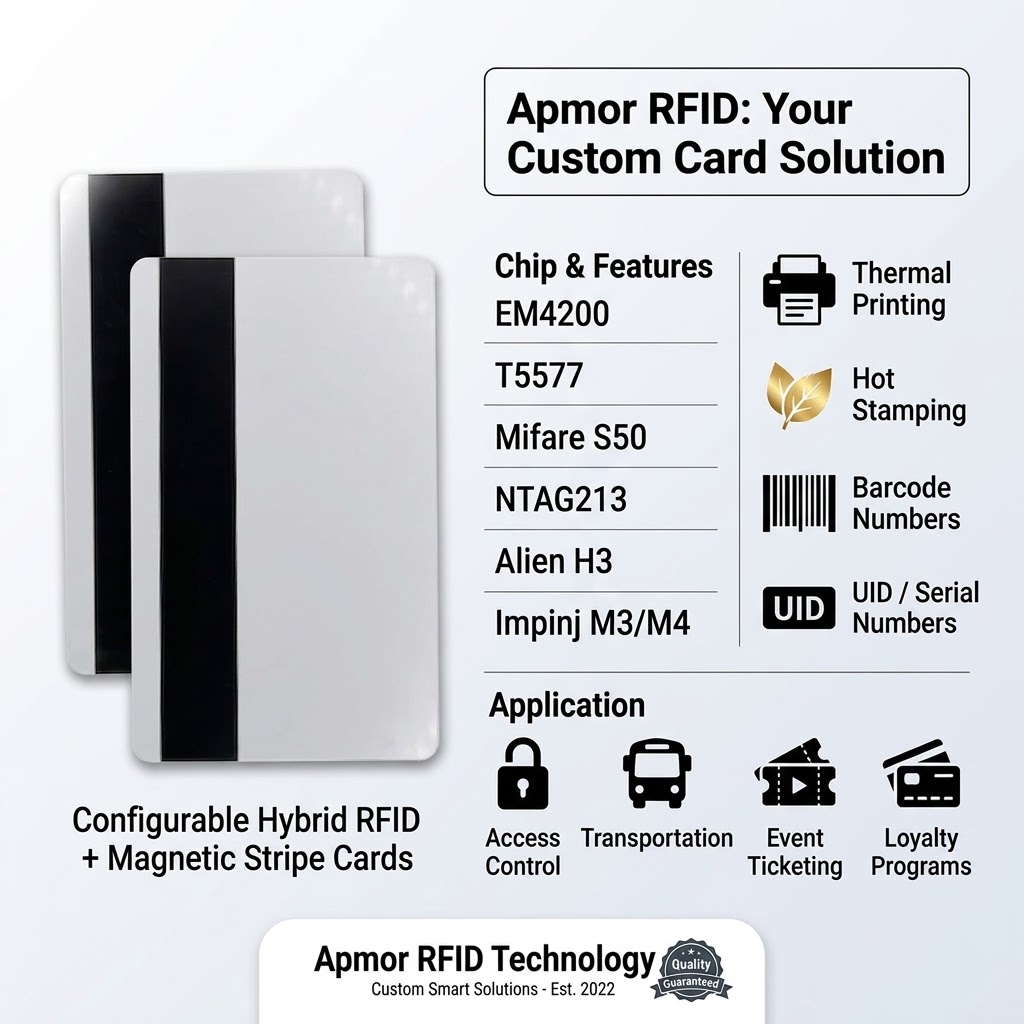
Apmor RFID’s Magnetic Stripe Card uses PVC as the base material and supports a range of RFID chips, including:
- EM4200
- T5577
- Mifare S50
- NTAG213
- Alien H3
- Impinj M3/M4
The listed card size is 86 × 54 mm, with customized dimensions available. The product information also specifies up to 10 years of data retention, at least 100,000 programming cycles, and a reading range of 0–5 m, depending on the RFID reader and antenna.
Why Magnetic Stripe and RFID in One Card?
A magnetic stripe card can combine conventional magnetic-stripe functionality with RFID technology. This gives you more flexibility when upgrading an existing card-based system while maintaining compatibility with certain legacy workflows.
Depending on your project, you can also request:
- Thermal printing
- Hot stamping
- Magnetic stripe
- Barcode numbers
- Serial numbers
- UID numbers
- Customized card dimensions
- Different RFID chip configurations
This approach is useful when your card needs to carry both visual identification and electronic data.
RFID Card Specifications and Applications
When you buy RFID card products for commercial use, the card’s technical configuration should match the reader and software system.
| Specification | Magnetic Stripe Card |
|---|---|
| Material | PVC |
| Standard Size | 86 × 54 mm |
| Frequency | 125KHz listed |
| Available Chips | EM4200, T5577, Mifare S50, NTAG213, Alien H3, Impinj M3/M4 |
| Memory Options | 144 byte, 128 byte, 1K byte, etc. |
| Data Retention | Up to 10 years |
| Programming Cycles | ≥100,000 |
| Reading Range | 0–5 m, depending on reader and antenna |
| Custom Features | Printing, magnetic stripe, barcode, UID, serial number |
The product can support several real-world scenarios, including public transportation, loyalty cards, event ticketing, and car parking. For access control or other RFID systems, you should verify the required frequency, chip type, encoding method, and reader compatibility before production.
How to Choose a Custom RFID Card
If you are comparing an RFID card supplier, follow these steps before ordering.
- Define your application
Determine whether you need the card for transportation, parking, loyalty programs, event access, identification, or another RFID workflow. - Confirm reader compatibility
Check the reader frequency and supported chip types. Do not assume that every RFID card works with every reader. - Select the RFID chip
Choose an available chip according to your memory, read/write, security, and system requirements. - Specify physical requirements
Confirm the PVC material, card size, magnetic stripe position, printing requirements, barcode, UID, and serial number. - Confirm encoding requirements
If your project requires pre-programmed cards, provide the encoding or UID requirements to your supplier before production. - Request a sample
Test the card with your actual reader and software before moving to a larger production order.
Following this process can reduce compatibility risks and help you control customization costs.
Buy RFID Card for Different Business Needs
Different industries require different RFID card configurations. For example, a parking operator may prioritize reliable identification and reader compatibility, while a loyalty program may focus more on printed branding and user identification.
For event ticketing, you may need customized visual printing together with RFID identification. For public transportation, the chip and reader configuration become particularly important because the card must work within an established ticketing system.
Apmor RFID also provides customized RFID solutions as part of its broader service offering, including product customization, technical support, supply chain management, and after-sales service. This can be useful when you need more than a standard blank RFID card.
Why Choose Apmor RFID for Custom RFID Cards?
Apmor RFID Technology was established in Shenzhen on October 24, 2022, with a stated focus on RFID labels and smart cards. The company reports a team of 48+ people, service coverage in 9 countries, and a customer satisfaction figure of 91% on its company information page.
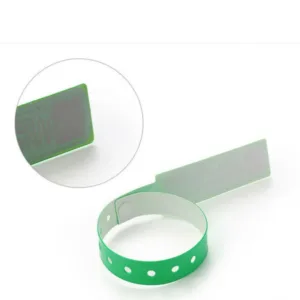
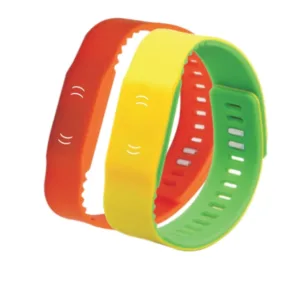
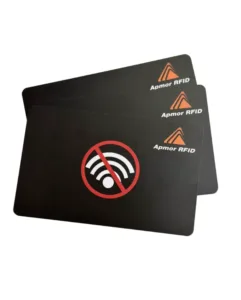
Its product portfolio extends beyond RFID cards to RFID wristbands, RFID blocking cards, cable-tie tags, RFID inlays and labels, keyfobs, laundry tags, on-metal labels, paper hang tags, and windshield tags.
For buyers, this broader product range can make it easier to source different RFID formats from the same supplier when a project requires cards, labels, tags, or wearable RFID products.
FAQ
1. What RFID card chips can I buy?
Apmor RFID lists EM4200, T5577, Mifare S50, NTAG213, Alien H3, and Impinj M3/M4 among its available chip options. The correct choice depends on your reader, frequency, memory, and application requirements.
2. Can I customize the RFID card size and printing?
Yes. The listed standard size is 86 × 54 mm, while customized dimensions are available. You can also specify options such as thermal printing, hot stamping, magnetic stripe, barcode, serial number, and UID number.
3. What should I test before ordering RFID cards?
You should test the selected card with your actual RFID reader and system. Check frequency, chip compatibility, reading distance, encoding performance, physical dimensions, and any magnetic stripe or printing requirements before confirming bulk production.
Conclusion
When you buy RFID card products, the right choice depends on more than price. You should match the RFID chip, frequency, memory, card dimensions, reader compatibility, and customization requirements to your actual application. With PVC construction, multiple chip options, magnetic stripe and printing capabilities, Apmor RFID Technology provides a configurable option for transportation, loyalty programs, event ticketing, parking, and other RFID projects.


Add comment