
RFID card blank products give you a flexible starting point for identification, tracking, and access-related applications. However, a standard card may not fit every installation. You may need a specific size, a compatible RFID chip, a reliable attachment method, or customized printing to match your equipment and workflow.
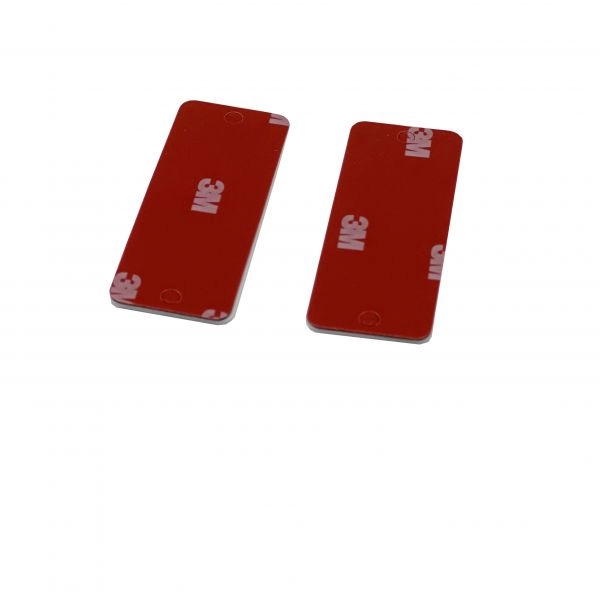
Apmor RFID Technology Co., Ltd. offers a customized 25 × 65 mm foam tape card designed for applications that require a compact card format and convenient attachment. Made from PVC, this card features side holes and foam tape to support installation in suitable locations. With several chip options, multiple operating frequencies, and customizable product finishes, you can evaluate a configuration that fits your project requirements rather than relying on a one-size-fits-all solution.
What Is an RFID Card Blank?
An RFID card blank is a card-format product that contains or accommodates RFID technology for wireless identification. Depending on its chip, frequency, memory, and programming requirements, it can support different identification and data-reading tasks.
For your project, choosing the right custom RFID card involves more than selecting a card size. You should confirm chip compatibility, reader frequency, attachment requirements, and whether the card needs printing or encoding before placing a bulk order.
Common selection factors include:
- Material: PVC for the customized card described here.
- Dimensions: A standard size of 25 × 65 mm, with other customized sizes available.
- Chip options: EM4200, T5577, MIFARE S50, NTAG213, Alien H3, and Impinj M3/M4, among others.
- Frequency: 125 kHz, 13.56 MHz, or 860–960 MHz, depending on the selected configuration.
- Customization: Available finishing options include hot stamping, thermal printing, serial numbers, UID numbers, and barcodes.
Confirm the exact chip and frequency combination with Apmor before ordering, because not every chip supports every frequency.
Key Features of the 25 × 65 mm RFID Card with Foam Tape
1. Compact PVC Design with Attachment Options
The 25 × 65 mm format provides a defined footprint for installations with limited space. Side holes and foam tape offer additional attachment options, helping you select a suitable mounting method for your application.
For example, a facility may need an identification card attached to a compatible fixture or equipment surface. Before installation, check the surface material, available space, and expected environmental conditions to determine whether the attachment method is appropriate.
2. Multiple RFID Chip Options
Apmor supports several RFID chip options for different identification requirements.
- EM4200 and T5577: Options to evaluate for compatible low-frequency identification systems.
- MIFARE S50 and NTAG213: Options for compatible 13.56 MHz applications.
- Alien H3 and Impinj M3/M4: UHF chip options to discuss for suitable inventory and identification systems.
The correct choice depends on your existing reader, required memory, data format, and intended use. Verify the chip specification and programming requirements before finalizing your order.
3. Flexible Printing and Data Customization
You can discuss product finishes and identification details with Apmor to align the card with your operational process.
Available options include:
- Hot stamping and thermal printing
- Barcode and serial number printing
- UID number identification
- Customized card dimensions
These options can help you organize cards for different locations, assets, or users. Confirm artwork, encoding, and quantity requirements with the supplier before production.
RFID Card Blank Specifications
The following table summarizes the supplied product specifications.
| Specification | Details |
|---|---|
| Product | Customized RFID card with foam tape |
| Material | PVC |
| Standard size | 25 × 65 mm |
| Customized size | Available upon request |
| Frequency options | 125 kHz, 13.56 MHz, 860–960 MHz |
| Chip options | EM4200, T5577, MIFARE S50, NTAG213, Alien H3, Impinj M3/M4, etc. |
| Data retention | 10 years, as specified |
| Programming cycles | ≥100,000, as specified |
| Memory | Options listed include 128 bytes, 144 bytes, and 1 KB |
| Reading range | 0–5 m, depending on the reader and antenna |
| Finishing | Hot stamping, thermal printing, barcode, serial number, UID number, etc. |
Memory capacity, read range, and programming performance depend on the selected chip and system configuration. Ask Apmor to confirm the specifications for your exact model.

How to Choose the Right Custom RFID Card
Follow these steps to reduce compatibility issues and unnecessary sampling costs.
- Identify your application. Define whether you need the card for transportation, loyalty programs, event ticketing, parking, or another identification task.
- Check reader compatibility. Match the card’s operating frequency and chip type to your existing RFID reader.
- Confirm the physical design. Specify the 25 × 65 mm format, side holes, foam tape, and any required alternative dimensions.
- Select printing and encoding options. Provide your artwork, numbering format, barcode requirements, or UID-related instructions.
- Request a sample or specification confirmation. Test reading performance and attachment suitability under actual operating conditions before committing to a larger order.
This process helps you evaluate the complete RFID system rather than judging a card by its appearance alone.
RFID Card Blank vs. Standard RFID Card
| Selection factor | RFID card blank | Customized foam tape card |
|---|---|---|
| Primary purpose | Flexible starting point for identification projects | Specific size and attachment requirements |
| Physical format | Depends on the selected product | 25 × 65 mm standard size |
| Attachment | Depends on the card design | Side holes and foam tape |
| Customization | Depends on supplier options | Multiple printing and identification options |
| Best selection criterion | Chip and reader compatibility | Compatibility plus installation requirements |
The term “blank” does not automatically mean that a card is unencoded or unprinted. Confirm the delivery condition and customization scope with your supplier.
Frequently Asked Questions
1. Can I customize the size of an RFID card blank?
Yes. Apmor lists 25 × 65 mm as the standard size and indicates that customized dimensions are available. Confirm the permitted dimensions and production requirements before ordering.
2. What frequency should I choose for my RFID card?
Choose 125 kHz, 13.56 MHz, or 860–960 MHz according to your reader and application. These frequencies are not interchangeable, so verify the selected chip’s compatibility with your equipment.
3. How far can this RFID card be read?
The supplied specification lists a reading range of 0–5 m, depending on the reader and antenna. Actual performance also depends on the selected chip, installation conditions, and system configuration. Test the final configuration in your intended environment.
Conclusion
Choosing the right rfid card blank requires you to balance chip compatibility, physical dimensions, attachment methods, and customization requirements. Apmor RFID Technology Co., Ltd. provides a 25 × 65 mm PVC foam tape card with side holes, multiple chip options, and several printing and identification finishes. By confirming the frequency, encoding requirements, and installation conditions before ordering, you can select a configuration that better fits your application.
CAT
Share your target frequency, preferred chip, required quantity, card dimensions, and printing or encoding needs with Apmor. The team can help you confirm product compatibility and discuss a suitable configuration for your project before you proceed with sampling or bulk production.




Add comment