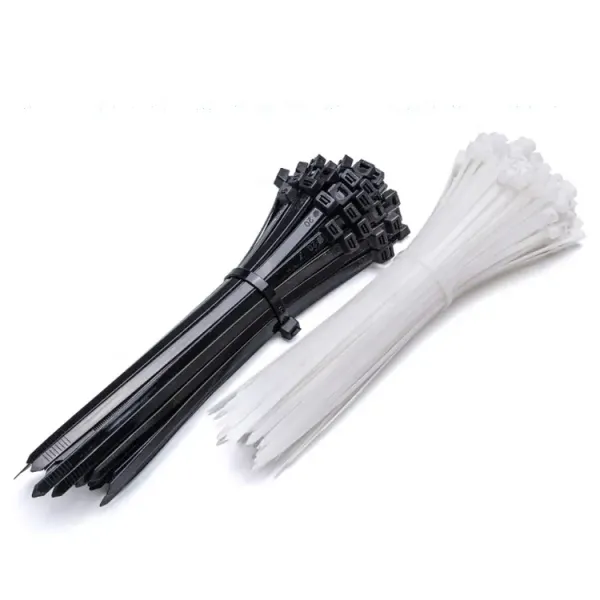
RFID tags for inventory help you identify, track, and manage goods throughout storage, transportation, and production. However, conventional labels can be difficult to attach securely to cables, bundled materials, containers, and irregularly shaped assets. When tags shift, detach, or become difficult to scan, your team may spend additional time locating items and updating inventory records.
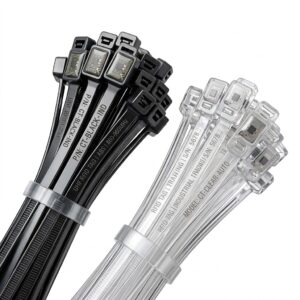
An RFID cable-tie tag offers a practical alternative. It combines an RFID chip with a fastening structure that you can secure around suitable objects without relying on a flat adhesive surface. Apmor RFID Technology Co., Ltd., established in 2022, supplies RFID labels and smart cards, including cable-tie tags designed for applications such as logistics management, production automation, container tracking, and access control. By selecting the right frequency, chip, and tag length, you can build an inventory identification system that fits your operational requirements.
How RFID Tags for Inventory Work
RFID inventory tracking uses radio-frequency identification technology to exchange data between a tag and a compatible reader. Each tag contains a chip and antenna that support identification according to the selected RFID technology.
When your team scans tagged items, the reader captures available tag data and passes it to compatible software for identification or record updates. The exact workflow depends on your reader, antenna, software, and system configuration.
Cable-tie RFID tags are particularly useful when you need to attach an identifier directly to an object.
Typical applications include:
- Logistics management: Identify packages, bundled goods, and handling units during internal transfers.
- Production automation: Associate materials or components with production stages.
- Container tracking: Attach identifiers to suitable containers or reusable handling equipment.
- Access control: Support identification workflows when the tag and access-control system are compatible.
- Asset management: Label equipment, cables, and other items that benefit from a secure fastening method.
Apmor RFID Cable-Tie Tag Specifications
Apmor RFID provides cable-tie tags with configurable options for different identification and tracking requirements. Before choosing a model, check the chip, frequency, dimensions, memory, and reading environment.
| Specification | Available options |
|---|---|
| Product type | RFID cable-tie tag |
| Materials | ABS, nylon, PC |
| Frequency | 13.56 MHz / 860–960 MHz |
| Chip options | Alien H3/H4, Impinj M4/M5, I-Code SLIX, NTAG213, Ultralight EV1, MIFARE 1K, and others |
| Length options | 200 mm, 330 mm, 345 mm, 445 mm, and customized sizes |
| Data retention | 10 years, according to supplied specifications |
| Programming cycles | ≥100,000, according to supplied specifications |
| Memory options | 128 bytes, 144 bytes, 1 KB, and other configurations |
| Reading range | 0–5 m, depending on the reader and antenna |
| Product features | Waterproof options and UID identification |
These specifications describe available configurations rather than a single universal model. Confirm the exact chip, memory, frequency, and environmental protection for your selected product before placing an order.
The stated reading range is also not a guaranteed result in every installation. Reader output, antenna design, tag orientation, surrounding materials, and interference can affect actual performance.
How to Choose RFID Inventory Tracking Tags
Choosing the right tag starts with your inventory process, not simply the lowest unit price. Consider the following factors before requesting a quotation.
1. Match the Frequency to Your Application
Select 860–960 MHz UHF RFID when you need to evaluate longer-range identification or compatible multi-tag reading. For applications using 13.56 MHz HF technology, choose a compatible HF tag and reader.
Do not assume that one tag supports every frequency or reader protocol. Confirm compatibility before purchasing.
2. Choose the Correct Chip and Memory
Your chip determines compatibility with the intended RFID system and influences available functions. For example, Apmor RFID lists Alien H3/H4 and Impinj M4/M5 options alongside several HF chip families.
Define whether your application needs a unique identifier, writable data, or integration with an existing inventory database. Your software may store most inventory information centrally rather than directly on the tag.
3. Measure the Required Cable Length
Apmor RFID offers lengths of 200 mm, 330 mm, 345 mm, and 445 mm, with customized options. Measure the object where you will fasten the tag, allowing enough room for secure closure without excessive slack.
4. Verify Environmental Requirements
If your inventory moves through wet, dusty, or demanding industrial environments, confirm the appropriate waterproof configuration and material. Test the tag under actual operating conditions, especially when objects contain metal or other materials that may affect radio-frequency performance.
5. Test Before Bulk Deployment
Order samples or request a technical evaluation when possible. Test representative items using your intended readers and software before standardizing the tag across your inventory.

RFID Cable-Tie Tags vs. Conventional RFID Labels
Different RFID formats serve different mounting and operating requirements. Use this comparison to identify a suitable starting point for your project.
| Factor | Cable-tie RFID tag | Adhesive RFID label |
|---|---|---|
| Attachment | Fastens around suitable objects | Sticks to a compatible surface |
| Irregular objects | Useful for bundles and equipment | Depends on available surface area |
| Repositioning | Can be removed if the fastening design allows | May lose adhesion or become damaged |
| Installation | Requires fastening around the object | Requires a suitable, clean surface |
| Typical applications | Cables, containers, logistics units | Cartons, products, and flat packages |
Neither format is universally better. Choose cable-tie tags when secure fastening is important; choose adhesive labels when surface application offers a simpler workflow.
How to Implement RFID Tags for Inventory
Follow these steps to introduce cable-tie tags into your inventory process:
- Identify your tracking objectives. Determine whether you need to track individual items, material bundles, containers, or production assets.
- Confirm technical compatibility. Match the frequency and chip to your readers, antennas, and inventory software.
- Select the tag configuration. Specify the cable length, material, memory, and environmental requirements.
- Assign and register identifiers. Link each tag’s identifier to the corresponding inventory record using your established data-management process.
- Run a pilot test. Evaluate reading reliability, attachment security, scanning distance, and workflow efficiency at representative locations.
- Review and scale. Resolve any installation or integration issues before expanding deployment.
Frequently Asked Questions
Are cable-tie RFID tags suitable for warehouse inventory?
Yes. They can identify bundled materials, containers, and equipment when the tag, reader, and inventory software are compatible. Your actual results depend on the operating environment and system configuration.
What is the reading range of Apmor RFID cable-tie tags?
The supplied product specifications state a range of 0–5 meters, depending on the reader and antenna. Actual range varies by frequency, chip configuration, tag orientation, installation conditions, and reader settings.
Can I customize RFID cable-tie tag lengths?
Yes. Apmor RFID lists standard lengths of 200 mm, 330 mm, 345 mm, and 445 mm, as well as customized sizes. Contact the company to confirm availability, chip options, and technical requirements for your application.
Conclusion
Choosing the right rfid tags for inventory can help you establish a more organized identification process for logistics, production, containers, and reusable assets. Apmor RFID cable-tie tags offer multiple material, chip, frequency, and length options, allowing you to evaluate a configuration that matches your equipment and tracking workflow. Confirm compatibility and test representative items before scaling up.
Request a Customized RFID Solution
Contact Apmor RFID Technology Co., Ltd. to discuss your inventory tracking requirements. Share your target application, preferred frequency, reader model, required cable length, and estimated order quantity to help the team recommend a suitable configuration.




Add comment