
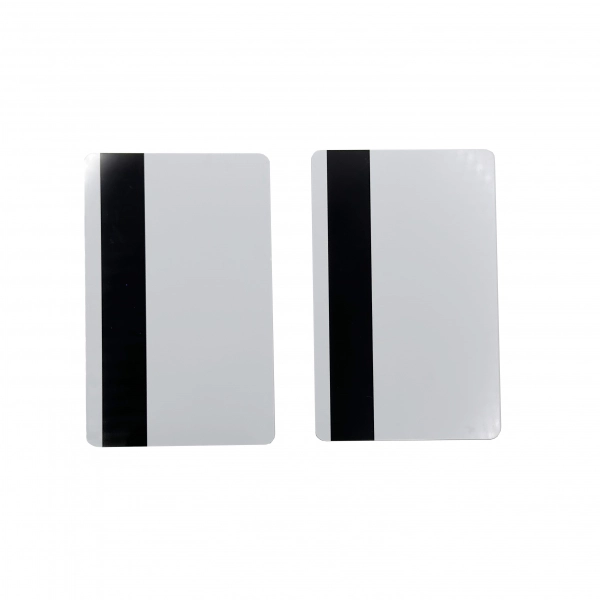
RFID card dimensions are an important consideration when you select cards for access control, public transportation, loyalty programs, or event ticketing. If your cards do not fit existing readers, wallets, card holders, or printing equipment, you may face compatibility problems, additional costs, and unnecessary production delays. Therefore, confirming the physical size and technical specifications before ordering helps you avoid these issues.
Apmor RFID Technology Co., Ltd. supplies RFID labels and smart cards for different business applications. Its PVC card offering lists a standard size of 86 × 54 mm, with customized dimensions also available. However, physical dimensions are only one part of the decision. You should also verify card thickness, chip compatibility, operating frequency, encoding requirements, and whether you need a magnetic stripe, RFID chip, or both.
What Are the Standard RFID Card Dimensions?
The listed standard size for Apmor RFID’s PVC card is 86 × 54 mm, which is close to the familiar ID-1 card format used for many payment cards and identification cards. This format fits common card holders and wallets, making it a practical starting point for business card projects.
Before placing an order, confirm the complete dimensional specifications with your supplier.
- Length: 86 mm
- Width: 54 mm
- Material: PVC
- Customization: Alternative dimensions can be discussed according to project requirements.
The product information does not specify card thickness or dimensional tolerances. If your cards must fit a specific printer, reader slot, or automated dispensing system, request those measurements before approving production.
Which RFID Card Dimensions Should You Choose?
The right dimensions depend on how you intend to use your cards and which equipment must support them.
Standard 86 × 54 mm Cards
Choose standard-size cards when you need compatibility with conventional card holders, employee ID systems, membership programs, or ticketing workflows designed for ID-1-format cards.
For example, a hotel introducing RFID-enabled guest cards may prefer this familiar format because staff can distribute and store cards easily. Nevertheless, you must confirm that the card’s chip type and frequency match the hotel’s access control system.
Custom RFID Card Dimensions
Custom dimensions can help you meet specific packaging, equipment, or branding requirements. Before selecting a non-standard format, check whether the reader supports the proposed card size and antenna design.
Discuss these details with Apmor RFID:
- Required length, width, and thickness.
- Card shape and material requirements.
- Chip type and operating frequency.
- Printing, numbering, and encoding requirements.
- Compatibility with your existing reader and card-handling equipment.
A custom card’s physical dimensions do not guarantee compatibility. The embedded chip, antenna arrangement, and reader specifications also affect performance.
RFID Card Specifications: A Comparison Table
The following table compares the available product details with the additional information you should confirm before ordering.
| Specification | Listed product details | What you should verify |
|---|---|---|
| Card dimensions | 86 × 54 mm; customization available | Thickness and tolerances |
| Material | PVC | Suitability for your environment |
| Frequency | 125 kHz listed | Whether the selected chip uses this frequency |
| Chip options | EM4200, T5577, Mifare S50, NTAG213, Alien H3, Impinj M3/M4 | Exact chip and protocol compatibility |
| Memory | 128 bytes, 144 bytes, 1 KB, etc. | Memory capacity of the selected chip |
| Data retention | 10 years listed | Applicable chip specification and conditions |
| Programming cycles | ≥100,000 listed | Whether this applies to your selected chip |
| Product customization | Printing, magnetic stripe, barcode, serial number, UID number | Available combinations and production limits |
Important: The listed chip options cover different technologies and frequencies. For example, EM4200 and T5577 are associated with low-frequency systems, while Mifare S50 and NTAG213 operate at 13.56 MHz, and Alien H3 and Impinj M3/M4 are UHF chip families. Do not assume that every listed chip operates at 125 kHz or supports the same reader.

How to Select the Right RFID Card Dimensions
Follow these steps to reduce specification errors before placing a bulk order.
1. Define the application. Identify whether you need cards for employee access, public transportation, parking, loyalty programs, or event ticketing.
2. Measure the available space. Check the required card length, width, and thickness against your card holder, printer, reader, or dispenser.
3. Select the chip technology. Confirm the reader’s frequency, protocol, and supported chip types. Physical size alone cannot establish compatibility.
4. Specify printing and encoding. Decide whether you need thermal printing, hot stamping, barcodes, serial numbers, UID numbers, or a magnetic stripe.
5. Request a sample or specification confirmation. Ask Apmor RFID to confirm the proposed dimensions, tolerances, chip configuration, and functional requirements before approving a production order.
6. Test the card in your actual system. Validate reading performance, encoding, fit, and day-to-day handling before committing to larger quantities.
Magnetic Stripe Cards vs. RFID Smart Cards
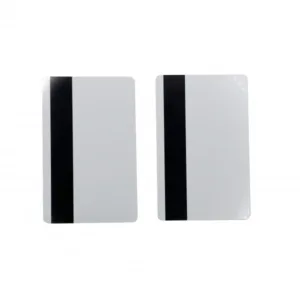
Although Apmor RFID lists magnetic stripe printing among its available product crafts, magnetic stripes and RFID chips work differently.
A magnetic stripe stores data magnetically and requires a compatible magnetic-stripe reader. An RFID card communicates through radio-frequency technology using an embedded chip and antenna. Some cards can combine both technologies, but you should confirm that the specific product supports this configuration.
For example, a business upgrading an older membership system may need magnetic-stripe compatibility, while a new contactless access control project may require a compatible RFID chip. Selecting the correct technology first helps you avoid purchasing cards that cannot work with your existing equipment.
Frequently Asked Questions
1. What are the standard RFID card dimensions?
Apmor RFID lists 86 × 54 mm for this PVC card. Confirm thickness and dimensional tolerances if your application requires precise fitting.
2. Can I order custom RFID card dimensions?
Yes, the product listing indicates that customized sizes are available. Contact Apmor RFID to confirm feasible dimensions, material, chip configuration, and minimum order requirements.
3. Do RFID card dimensions affect reading distance?
Card dimensions alone do not determine reading distance. The chip, antenna design, operating frequency, reader, and surrounding environment all influence performance. Apmor RFID lists a reading range of 0–5 m, but actual results depend on the reader and antenna and must be validated for the selected configuration.
Conclusion
Choosing the right rfid card dimensions starts with confirming the physical size, but a successful card project also requires compatible chips, suitable materials, and the correct encoding or printing options. Apmor RFID Technology Co., Ltd. lists PVC cards in an 86 × 54 mm format and offers customization for different applications. By verifying your equipment requirements and testing the selected configuration before bulk production, you can make a more informed purchasing decision.
CAT
Contact Apmor RFID to discuss your card requirements. Share your target dimensions, intended application, reader frequency, chip preference, and printing needs to request a suitable configuration and quotation. Visit Apmor RFID’s Magnetic Stripe Card product page for product details.



Add comment