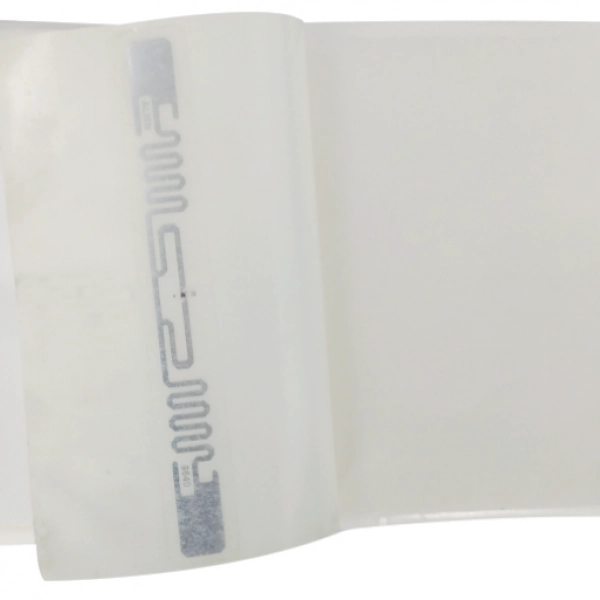
UHF RFID label technology helps you automate participant identification and race timing without relying on manual checks at every stage of an event. For marathon organizers, timing companies, and sports event operators, inaccurate bib identification, slow participant processing, and difficult-to-read barcodes can create operational problems. A properly configured RFID tag can capture participant data as runners pass through designated reading points, helping you collect timing information more efficiently.
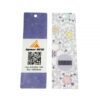
Apmor RFID Technology Co., Ltd. develops RFID labels and smart card products for different identification and tracking applications. Its Marathon Label supports multiple RFID frequencies, including 860–960 MHz for UHF applications, with customized sizes and materials available for different event requirements.
How a UHF RFID Label Supports Marathon Timing
A marathon requires reliable identification across starting lines, checkpoints, and finish lines. When you use an RFID racing tag together with compatible readers and antennas, the system can identify participants automatically as they move through the reading area.
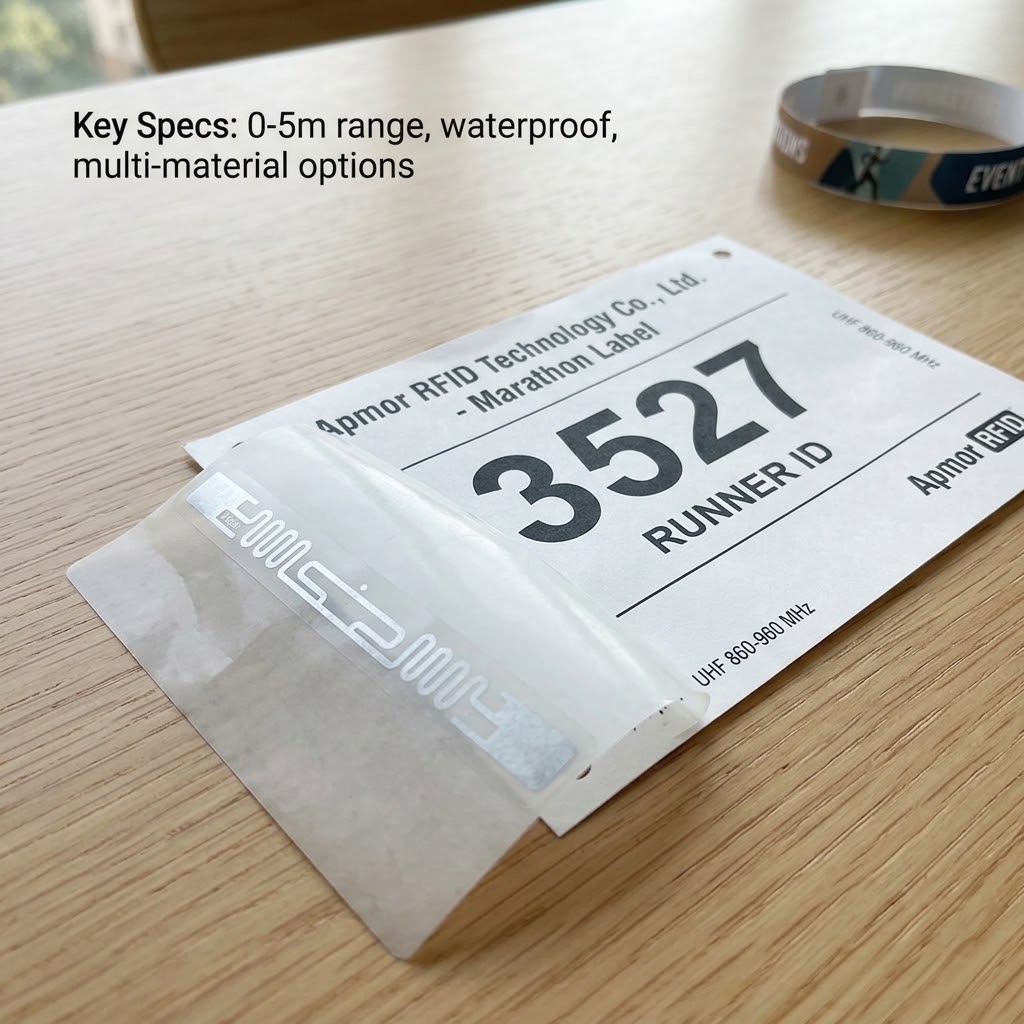
For example, an event organizer can attach an RFID label to a runner’s bib. The RFID system can associate the tag’s UID, serial number, or barcode number with the participant record in the race management system.
The Marathon Label from Apmor provides:
- 860–960 MHz UHF frequency for compatible long-range RFID applications
- 0–5 m reading range, depending on the reader and antenna
- 45 × 30 mm standard size with customized dimensions available
- Paper, PVC, and PET material options
- Waterproof product configurations
- Barcode, serial number, and UID number options
- Up to 10 years of data retention
- At least 100,000 programming cycles
- Memory options including 128 byte, 144 byte, and 1 KB
These specifications allow you to configure the RFID label according to the event environment, reader system, and data requirements.
UHF RFID Label Materials and Frequency Options
Not every RFID event uses the same operating environment. You may need different materials, frequencies, chip configurations, or label constructions depending on whether you are running a marathon, temporary event, concert, or ticketing application.
Material Selection
Apmor offers three listed material options:
- Paper: suitable for lightweight disposable event labels and bib applications.
- PVC: provides a more durable construction for applications requiring additional resistance.
- PET: suitable when you need a stronger label material and stable physical performance.
You can also request customized dimensions and product configurations based on your event requirements.
Frequency Selection
The Marathon Label supports:
| Frequency | Typical Application Consideration | Example Use |
|---|---|---|
| 125 KHz | Low-frequency identification | Access and identification |
| 13.56 MHz | High-frequency RFID systems | Cards and short-range identification |
| 860–960 MHz | UHF RFID applications | Race timing and longer-range reading |
For marathon timing, the 860–960 MHz UHF RFID label configuration is particularly relevant when your infrastructure uses compatible UHF RFID readers and antennas.
RFID Racing Tag vs. Barcode Label
You may still use printed barcodes on race bibs, but RFID can provide another identification method for automated reading. The two technologies can also work together rather than replacing each other completely.
| Feature | RFID Racing Tag | Barcode Label |
|---|---|---|
| Reading method | Radio frequency | Optical scanning |
| Line of sight | Generally not required | Usually required |
| Automated identification | Yes, with compatible RFID equipment | Requires scanner positioning |
| UID support | Available | Not applicable |
| Serial number | Available | Available |
| Reading distance | Up to 0–5 m depending on system | Typically short-range |
| Event integration | Can integrate with RFID timing systems | Integrates with barcode systems |
For a high-participant event, you can combine RFID identification with printed participant information to provide both automated processing and visual backup.
How to Deploy a Marathon RFID Label
You can follow a simple implementation process when preparing an RFID timing system:
- Define the event requirements
Determine participant volume, reading locations, label dimensions, materials, and required frequency. - Select the RFID configuration
Choose the appropriate chip, memory, material, and frequency based on your reader and antenna system. - Encode participant information
Program the RFID tag with the required UID, serial number, or other identification data. - Apply the label to the sports bib
Position the RFID label according to your race system’s installation requirements. - Test the reading system
Check reading performance at the start, checkpoints, and finish before the event begins. - Connect the data to your timing platform
Map RFID identifiers to participant records so your software can process captured data.
Why Choose Apmor RFID for Custom RFID Labels?
Apmor RFID Technology Co., Ltd. was founded in 2022 and focuses on RFID labels and smart card solutions. The company reports a team of 50+ people, service coverage across 10+ countries, and a stated 95% customer satisfaction rate.
Its service scope includes customized products, technical support, global supply chain management, and after-sales service. For a sports event, this means you can discuss the required label size, material, frequency, chip, memory, and identification format before production.
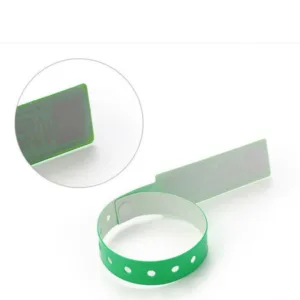
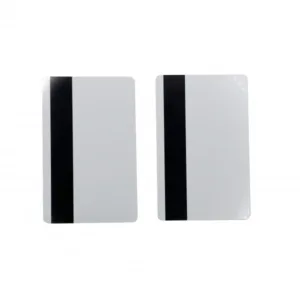
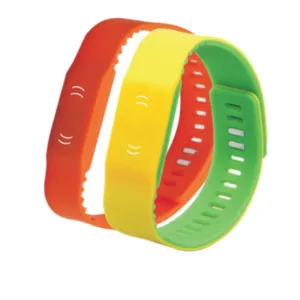
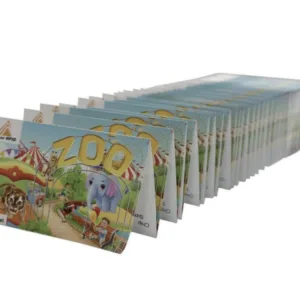
Apmor also supports RFID products beyond marathon labels, including RFID wristbands, RFID cable-tie tags, RFID fan-fold tickets, RFID on-metal labels, RFID laundry tags, RFID windshield tags, and RFID paper hang tags.
FAQ
1. What is a UHF RFID label used for in marathon timing?
A UHF RFID label can identify participants automatically when they pass compatible RFID readers. Event organizers can use the captured tag information for race timing and participant tracking.
2. What is the reading range of the Apmor Marathon Label?
The listed reading range is 0–5 meters, but actual performance depends on the RFID reader, antenna, tag orientation, installation position, and surrounding environment.
3. Can Apmor customize marathon RFID labels?
Yes. The product supports customized sizes, with 45 × 30 mm listed as one available size. You can also discuss material, chip, frequency, barcode, serial number, and UID requirements with Apmor.
Conclusion
For marathon organizers and race timing providers, choosing the right UHF RFID label means matching the label’s frequency, material, chip, size, and reading performance with your existing RFID infrastructure. Apmor RFID Technology Co., Ltd. provides customizable Marathon Labels with 860–960 MHz UHF options, 0–5 m listed reading range, multiple materials, and different data configurations for sports and event identification applications.
If you are planning a marathon, running race, or temporary sports event, contact Apmor with your reader model, required label size, participant volume, application environment, and target frequency. The team can help you determine a suitable RFID label configuration and provide a quotation based on your actual requirements.

Add comment