An RFID electronic label can help you improve vehicle identification, logistics tracking, and access management without relying entirely on manual checks. However, choosing the right label requires more than selecting a tag that supports radio frequency identification. You also need to consider operating frequency, chip compatibility, label material, dimensions, printing requirements, and the environment in which you will use it.
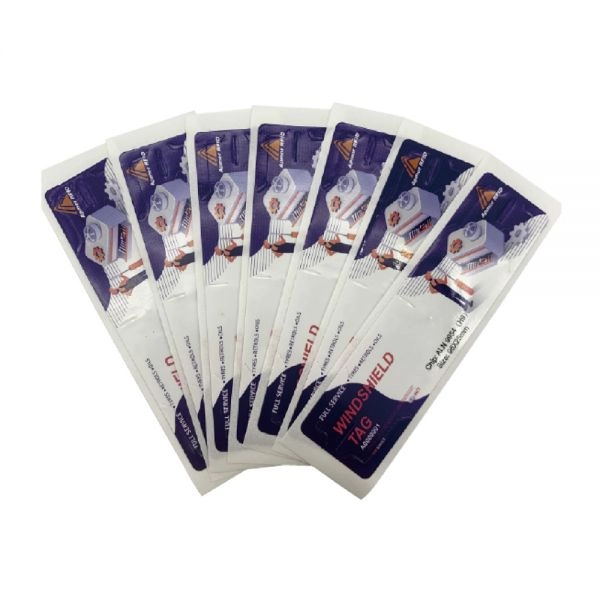
Apmor RFID Technology Co., Ltd. provides RFID labels and smart cards for different industry applications. Its UHF RFID windshield label supports the 860–960 MHz frequency range and offers several chip options and customizable label formats. If you are sourcing a vehicle RFID label for fleet management, logistics operations, or electronic toll collection (ETC) applications, understanding these specifications can help you evaluate whether the product fits your requirements.
What Is an RFID Electronic Label?
An RFID electronic label combines an RFID chip and antenna with a label substrate. An RFID reader sends radio signals to the tag, and the tag responds with stored identification data according to its design and configuration.
Unlike labels that require visual inspection, RFID labels allow compatible readers to identify tagged items electronically. This capability can support faster data collection across vehicle management, supply chain operations, and asset tracking.
A UHF RFID electronic label is particularly relevant when your application requires identification across a defined reading zone. However, actual reading distance depends on the chip, antenna design, reader power, installation position, surrounding materials, and operating environment. You should verify the required read range through application-specific testing.
Key Specifications of Apmor RFID Windshield Labels
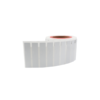
Apmor RFID’s windshield label is designed for vehicle identification and other tracking applications. Review the following specifications when assessing its suitability for your project.
| Specification | Product Details |
|---|---|
| Product type | RFID windshield label |
| Materials | Paper or PVC |
| Frequency | 860–960 MHz |
| Available chips | Alien H9, Monza 4, Monza 5 |
| Available sizes | 102 × 76 mm, 100 × 50 mm, 99 × 24 mm, 73 × 23 mm, 86 × 54 mm, and other options |
| Operating temperature | -25°C to 50°C |
| Operating humidity | 20%–80% RH |
| Printing options | Single-color or multicolor printing |
| Additional customization | Barcode, QR code printing, and data encoding |
| Writing cycle specification | 100,000 times |
Before placing an order, confirm the selected chip’s compatibility with your reader and software. You should also clarify whether the stated writing-cycle specification applies to your intended encoding process and whether the selected label configuration meets your environmental requirements.
Applications of UHF RFID Electronic Labels
Vehicle Management and ETC Applications
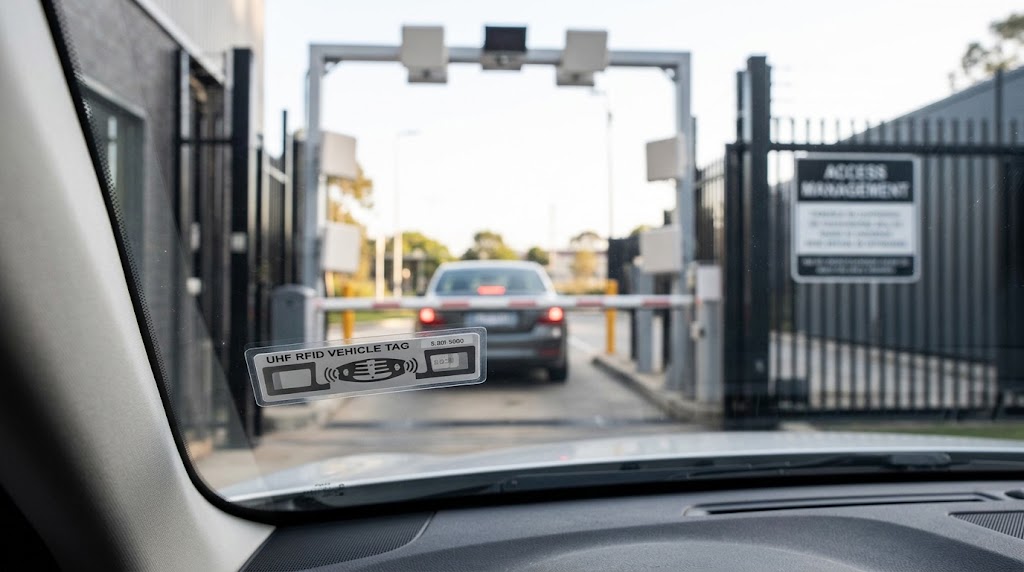
Vehicle RFID labels can support identification workflows at parking facilities, controlled entrances, fleet depots, and electronic toll collection points. For example, an operator can associate a label’s identifier with a vehicle record in a management system.
For ETC or automated access applications, confirm that the label’s chip, reader, frequency, and system protocol meet the requirements of the relevant infrastructure. The product’s UHF frequency specification alone does not establish compatibility with every ETC system.
Logistics and Supply Chain Management
Logistics operators can use RFID labels to associate vehicles, shipments, or transport records with digital information. When integrated with compatible readers and management software, this approach can help reduce repetitive manual data entry and improve the visibility of goods moving through operational checkpoints.
Asset and Luggage Tracking
RFID labels can also support asset identification and luggage tracking. You can assign each label a unique identifier and link it to a corresponding record in your database. However, the label does not independently provide GPS location tracking; location visibility depends on the surrounding RFID reader infrastructure and software.
RFID Electronic Label vs. Other Identification Options
Different identification methods suit different operational requirements. Compare the main options before selecting a solution.
| Identification Method | Main Advantage | Consideration |
|---|---|---|
| UHF RFID electronic label | Electronic identification using compatible UHF readers | Requires compatible RFID infrastructure |
| Barcode or QR code label | Can be scanned with suitable optical equipment | Usually requires a readable code and suitable scanning position |
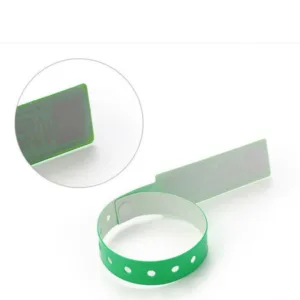
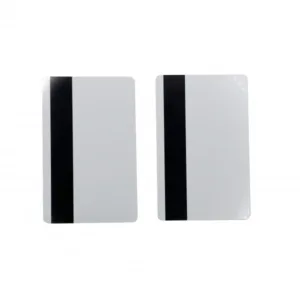
| RFID card | Suitable for card-based identification and access workflows | Physical card format may not suit windshield labeling |
| Manual vehicle identification | Can work without RFID infrastructure | May require more staff involvement and manual checks |
If you need automated identification across a designated reading zone, a UHF RFID electronic label may be worth evaluating. If your workflow depends on smartphone scanning or direct visual inspection, a printed barcode or QR code may be more appropriate.
How to Choose the Right RFID Windshield Label
Follow these steps to define your requirements before requesting a quotation.
- Identify your application. Specify whether you need vehicle access management, ETC integration, logistics tracking, or asset identification.
- Confirm frequency and chip requirements. Check your reader specifications and confirm compatibility with Alien H9, Monza 4, or Monza 5.
- Select the material and dimensions. Compare paper and PVC options, then choose a suitable size for your installation area.
- Define printing and encoding needs. Specify colors, logos, barcode or QR code printing, and required data encoding.
- Validate operating conditions. Check temperature, humidity, windshield placement, and any installation-related restrictions.
- Request sample testing. Evaluate reading performance, placement, and system compatibility before approving bulk production.
Providing these details helps Apmor RFID understand your requirements and recommend a more suitable product configuration.
Frequently Asked Questions
1. What frequency does the Apmor RFID windshield label support?
The product supports 860–960 MHz UHF operation. Confirm the appropriate frequency configuration and regional compliance requirements with your supplier before ordering.
2. Can I customize the size and printing of an RFID electronic label?
The product information lists several sizes, single-color and multicolor printing, barcode or QR code printing, and data encoding. Contact Apmor RFID to confirm available combinations, minimum order quantities, and production requirements.
3. Is a UHF RFID windshield label suitable for every vehicle access system?
No. Compatibility depends on the reader, chip, communication protocol, frequency configuration, installation conditions, and system requirements. Test the proposed label with your actual equipment before deploying it.
Conclusion
Selecting an RFID electronic label requires you to match technical specifications with your identification workflow. Apmor RFID’s windshield label offers 860–960 MHz UHF operation, Alien H9 and Monza chip options, multiple sizes, and printing and encoding choices for vehicle management, logistics, and asset tracking applications. Evaluate reader compatibility, installation conditions, and sample performance before committing to a production order.
CAT
Contact Apmor RFID Technology Co., Ltd. at ariel@apmorrfid.com or +86 150 1946 8360 to discuss your application, required chip, label dimensions, printing artwork, and encoding specifications. Share your reader model and target reading conditions to help the team assess a suitable configuration for your project.

Add comment