Metal surfaces can interfere with RFID communication, making it difficult to identify, track, and manage equipment consistently. An anti metal RFID label addresses this challenge through a structure designed for use on metal objects. However, choosing the right label requires more than checking its size or chip type. You also need to consider frequency, memory capacity, mounting method, environmental conditions, and the requirements of your tracking system. Apmor RFID Technology Co., Ltd. provides a UHF flexible on-metal tag designed for applications that require RFID identification on metal surfaces. Its PET, aluminum foil, and foam construction, adhesive installation, and customizable options give you several factors to evaluate when planning an RFID deployment.
What Is an Anti Metal RFID Label?
An anti metal RFID label is an RFID tag designed to operate on or near metal surfaces. Conventional RFID tags can experience performance changes when mounted directly on metal because conductive materials affect the electromagnetic field around the antenna.
An anti-metal design uses a structure intended to address this challenge. The actual reading performance still depends on the tag design, reader configuration, mounting surface, and surrounding environment.
Common applications include:
- Equipment and machinery identification
- Metal asset and tool tracking
- Warehouse inventory management
- Industrial equipment identification
- Asset records linked to RFID-enabled management systems
Before selecting a label, confirm that its frequency and physical design match your intended application.
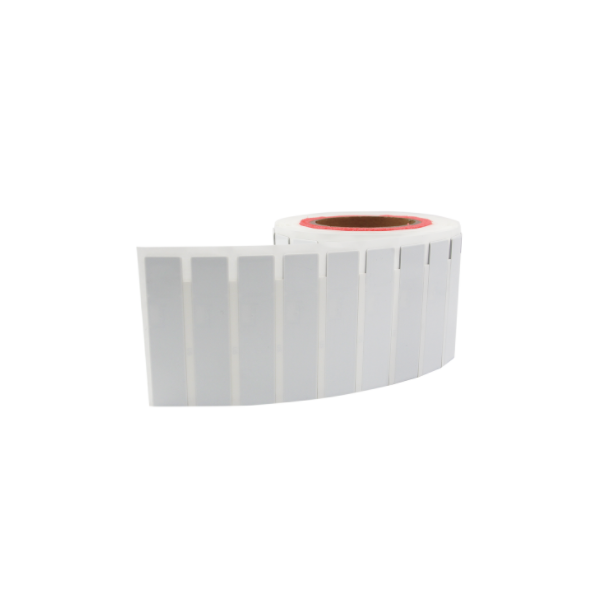
Apmor RFID UHF Flexible On-Metal Tag Specifications
Apmor RFID Technology Co., Ltd. specializes in RFID labels and smart cards. Its UHF flexible on-metal tag combines a multilayer material structure with configurable product options for different identification requirements.
| Specification | Product Details |
|---|---|
| Product type | UHF Flexible On-Metal Tag |
| Material | PET, aluminum foil, and foam |
| Available chip | NXP UCODE 8 |
| EPC memory | 128 bits |
| TID memory | 96 bits |
| Read/write | Yes, EPC and User memory |
| Data retention | Up to 50 years |
| Rewrite endurance | 100,000 times |
| Installation | Adhesive |
| Working temperature | -40°C to +85°C |
| Survival temperature | -40°C to +120°C |
| Customization | Logo, barcode/QR code, number printing, and encoding |
| Size | Customizable |
These specifications help you assess compatibility with your identification and tracking requirements. However, the stated data retention and rewrite figures should not be confused with the tag’s physical service life or guaranteed system performance under every operating condition.

Why Material Structure Matters
The product uses PET, aluminum foil, and foam in its construction. This multilayer structure is intended for on-metal applications, while the adhesive mounting method allows installation without drilling or adding a mechanical fastener.
For your project, confirm the available dimensions, adhesive compatibility, surface condition, and installation requirements before ordering. You should also request application-specific read-range testing if the label will be used on different metal objects or in demanding industrial environments.
Anti Metal RFID Label vs. Standard RFID Label
Not every RFID label suits every mounting surface. The following comparison highlights the main selection considerations.
| Selection Factor | Anti Metal RFID Label | Standard RFID Label |
|---|---|---|
| Intended mounting | Designed for metal surfaces | Depends on the specific design |
| Metal compatibility | Engineered to address metal-related interference | Direct metal mounting may affect performance |
| Material structure | May use specialized layers or spacers | Varies by product |
| Installation | Adhesive or other specified mounting methods | Depends on product design |
| Application | Metal equipment and asset identification | Packaging, cartons, and other compatible surfaces |
This comparison describes general product categories rather than measured performance results. Always check the manufacturer’s specifications for the exact label you plan to use.
How to Select the Right UHF RFID Label for Metal
Follow these steps to narrow down your options before placing a bulk order.
- Identify the mounting surface. Determine whether the label will attach to steel equipment, metal containers, tools, or another surface. Record the surface shape and available mounting area.
- Confirm the chip and frequency. This product specifies NXP UCODE 8 and a UHF design. Verify compatibility with your RFID readers, regional frequency requirements, and existing software.
- Define memory requirements. The tag provides 128-bit EPC memory and 96-bit TID memory. Check which identifiers your system needs and confirm the available user-memory configuration before implementation.
- Check environmental conditions. The specified working temperature is -40°C to +85°C, with a survival temperature of -40°C to +120°C. Compare these limits with normal operating temperatures and short-term exposure conditions.
- Specify customization and installation. Confirm the required label dimensions, logo, barcode or QR code, number printing, and encoding. Evaluate the adhesive against the target surface and operating environment.
- Test before scaling. Apply sample labels to representative metal objects and test them with your actual readers and software. Check read consistency, orientation, mounting conditions, and workflow integration before committing to larger quantities.
FAQ
1. Can an anti metal RFID label be attached directly to metal?
Yes, a label designed for on-metal applications is intended for this type of installation. Apmor RFID’s UHF flexible on-metal tag uses adhesive mounting. However, confirm surface preparation and application compatibility before installation.
2. What is the operating temperature of this UHF on-metal tag?
The specified working temperature is -40°C to +85°C, while the survival temperature is -40°C to +120°C. These ranges represent different conditions, so you should confirm suitability for your actual operating environment.
3. Can Apmor RFID customize the label?
The listed customization options include logo printing, barcode or QR code printing, number printing, encoding, and customized sizes. Contact Apmor RFID to confirm the available configurations, order quantities, samples, and compatibility with your RFID system.
Conclusion
Choosing an anti metal RFID label requires you to balance mounting compatibility, chip specifications, memory capacity, environmental limits, and integration requirements. Apmor RFID Technology Co., Ltd. offers a UHF flexible on-metal tag with PET, aluminum foil, and foam construction, adhesive installation, NXP UCODE 8, and customizable labeling options. By confirming your surface conditions and testing representative samples, you can make a more informed decision for your asset identification or inventory management project.
CTA: Request a Customized RFID Label
Contact Apmor RFID at ariel@apmorrfid.com or call +86 15019468360 to discuss your target metal surface, required dimensions, reader compatibility, encoding needs, and expected operating conditions. Request product samples and application-specific testing details before finalizing your order.



Add comment