

Many businesses still face challenges with manual tracking, inefficient data collection, and limited product identification accuracy. A passive RFID tag provides a reliable way to automate identification without requiring an internal battery, helping companies improve inventory control, access management, and asset tracking.
Unlike traditional labels or barcodes, passive RFID tags use radio frequency technology to transfer stored information through RFID readers. Apmor RFID Technology Co., Ltd. develops RFID labels and smart card solutions, offering customizable options including UHF/HF chips, printing, encoding, and different surface materials for various industries.
What Is a Passive RFID Tag?
A passive RFID tag is an electronic identification device that operates without a built-in battery. Instead, it receives energy from an RFID reader and sends stored data back through radio frequency communication.
These tags are widely used because they offer:
- Long service life without battery replacement
- Low maintenance requirements
- Flexible integration with RFID systems
- Customizable formats for different applications
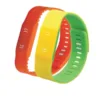
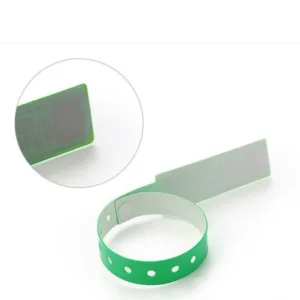
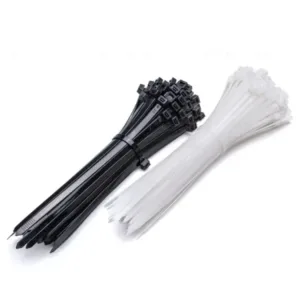
Apmor RFID specializes in RFID products, including RFID Fan-fold Ticket, RFID wristbands, RFID inlays, RFID cable-tie tags, and customized RFID labels.
How Does a Passive RFID Tag Work?
A passive RFID tag contains a chip and antenna system. When an RFID reader sends out radio waves, the tag captures energy from the signal, activates the chip, and transmits stored information.
The basic working process includes:
- Reader sends a radio frequency signal
The RFID reader creates an electromagnetic field to activate nearby tags. - Tag receives energy and responds
The passive RFID chip uses the received energy to process stored information. - Data is transmitted to the system
The reader collects UID, serial numbers, or encoded information for management purposes.
This simple structure allows passive RFID tags to support applications such as logistics tracking, retail management, event tickets, and industrial identification.
Passive RFID Tag Options from Apmor RFID
When selecting a passive RFID tag, businesses need to consider chip type, material, printing requirements, and application environment.
Apmor RFID provides flexible customization based on customer requirements.
| Feature | Passive RFID Tag Options |
|---|---|
| Chip Type | UHF / HF chips |
| Antenna Material | Aluminium foil antenna |
| Surface Material | Coated paper, thermal paper |
| Printing | Offset CMYK printing, silk screen Pantone color printing |
| Surface Finish | Glossy or matte |
| Personalization | UID, S/N, barcode, QR code printing |
| Encoding | UID list encoding with hexadecimal or decimal format |
For example, Apmor RFID’s RFID Fan-fold Ticket uses UHF/HF chip options with a 98×25mm size design. It supports custom numbering, barcode printing, QR codes, and encoding based on customer data lists.
Applications of Passive RFID Tags
A passive RFID tag manufacturer needs to provide solutions that match real business environments. Different industries require different materials, frequencies, and data structures.
Common applications include:
Inventory and Supply Chain Management
Passive RFID tags help companies track products throughout storage and transportation. Compared with manual scanning, RFID enables faster identification and reduces operational errors.
Event Management and Ticketing
RFID tickets can support automated access control and attendee management. Fan-fold RFID tickets are suitable for:
- Concerts
- Exhibitions
- Sports events
- Theme parks
Retail and Product Identification
Retail businesses use RFID labels for inventory visibility, product authentication, and stock management.
Industrial Asset Tracking
Manufacturers can apply passive RFID tags to equipment, tools, and components for better asset control.

Why Choose Apmor RFID for Passive RFID Tag Solutions?
Founded on October 24, 2022, Apmor RFID Technology Co., Ltd. focuses on RFID labels and smart card development. The company operates with a team of more than 46 members and provides customized RFID solutions for global customers.
Apmor RFID focuses on:
- RFID product customization based on customer requirements
- Different chip and material options
- Professional technical support
- Global supply chain coordination
- Application-focused RFID solutions
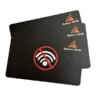
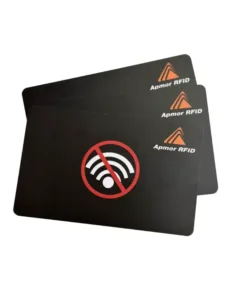
The company’s product range covers RFID wristbands, RFID blocking cards, RFID cable-tie tags, RFID Fan-fold Tickets, RFID inlays, RFID laundry tags, RFID on-metal labels, and RFID windshield tags.
How to Select the Right Passive RFID Tag
Choosing the correct RFID tag requires evaluating your operating environment and data requirements.
Consider these steps:
- Define the application purpose
Identify whether the tag will be used for inventory, ticketing, tracking, or access control. - Select the suitable frequency
Choose UHF for longer reading distance applications or HF for closer-range identification. - Confirm material requirements
Select paper, thermal material, or specialized surfaces according to usage conditions. - Customize data and printing requirements
Add UID, barcode, QR code, or serial number information based on your management system. - Test compatibility with RFID readers
Verify that the tag works correctly with your existing RFID infrastructure.
FAQ
1. What is the difference between passive RFID tags and active RFID tags?
Passive RFID tags do not have batteries and rely on RFID readers for power, while active RFID tags contain batteries and usually provide longer reading ranges.
2. Can passive RFID tags be customized?
Yes. Manufacturers can customize chip types, antenna designs, materials, printing formats, and encoding information according to project requirements.
3. How long can passive RFID tags work?
Because passive RFID tags have no internal battery, they can operate for many years when used under suitable environmental conditions.
Conclusion
A reliable passive RFID tag helps businesses improve identification efficiency, reduce manual operations, and build smarter management systems. With customizable UHF/HF chips, printing options, and encoding services, Apmor RFID provides flexible RFID solutions for industries including logistics, retail, events, and asset management.
CTA
Need a customized RFID solution for your project? Contact Apmor RFID today to discuss your required chip type, material, printing design, and bulk order specifications. Our team can help you select the right RFID product for your application.



Add comment