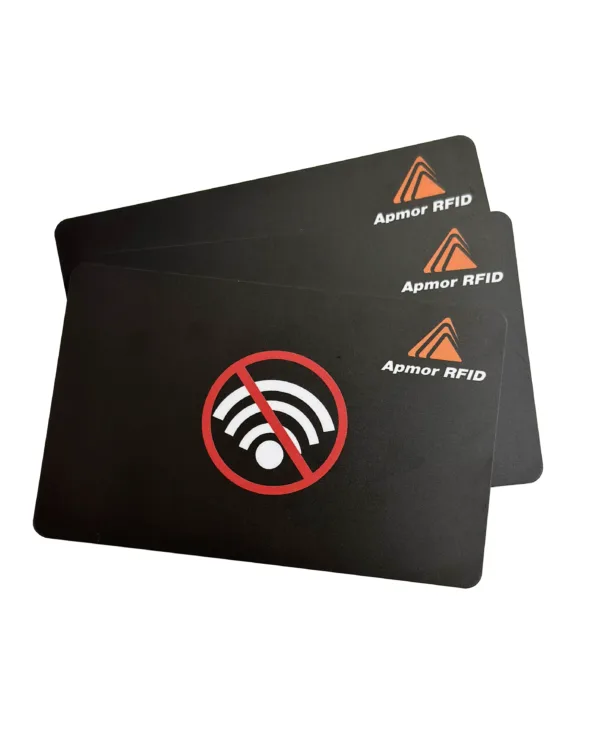
Best RFID card blocker is a useful search term if you want to reduce the risk of unauthorized RFID scanning while carrying bank cards, contactless cards, or other compatible cards in your wallet. However, not every card marketed for RFID protection offers the same level of protection. You need to consider the card’s intended frequency range, verified blocking performance, dimensions, and compatibility with your everyday wallet.
Apmor RFID Technology Co., Ltd. develops RFID labels and smart cards, including its Blocking Card product. Founded on October 24, 2022, the company provides product customization and technical support for different customer requirements. Before choosing a privacy card, you should understand which specifications matter, how to evaluate a supplier, and what evidence you need to verify its effectiveness.
What Is the Best RFID Card Blocker for Everyday Use?
An RFID card blocker is designed to help prevent unauthorized RFID communication when placed in an appropriate position relative to compatible cards and readers. Its effectiveness depends on the product’s construction, the frequency involved, the reader’s characteristics, and how you carry the card.
For everyday use, look for these features:
- Verified blocking performance: Ask for test results covering the frequencies and conditions relevant to your cards.
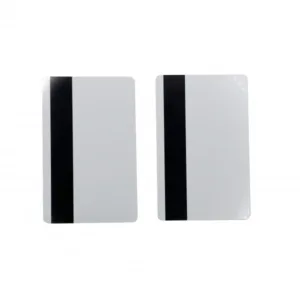
- Wallet-friendly dimensions: A standard bank-card format is convenient for carrying alongside payment cards.
- Suitable materials: Confirm the material options and construction available for the specific blocking-card model.
- Clear usage instructions: The supplier should explain positioning, compatibility, and any limitations.
- Customization options: For business buyers, custom dimensions, printing, and branding may be important.
Apmor RFID lists its Blocking Card under its RFID Blocking Card category. Buyers can contact the company to confirm the precise configuration and performance evidence available for their intended application.
Apmor RFID Blocking Card: Product Specifications
The following details are listed on Apmor RFID’s product page. Confirm which specifications apply specifically to the blocking-card version before placing an order.
| Specification | Listed information |
|---|---|
| Product | RFID Blocking Card |
| Materials | PVC, PET, PPS |
| Standard size | 86 × 54 mm |
| Customization | Customized sizes available |
| Available chip options | FM11RF08, NXP S70, NXP Ultralight, NTAG213, I-Code 2, and others |
| Listed frequencies | 125 kHz, 13.56 MHz, 860–960 MHz |
| Listed applications | Credit card protection and privacy protection |
| Listed data retention | 10 years |
| Listed programming cycles | ≥100,000 |
Important: Chip, memory, reading-range, and programming-cycle specifications may describe programmable RFID cards rather than the blocking function itself. Ask Apmor RFID to confirm their applicability to this product. These specifications alone do not establish RFID blocking effectiveness.
Which Materials and Sizes Should You Consider?
PVC, PET, and PPS are the material options listed by Apmor RFID. Your selection should reflect the required durability, appearance, intended environment, and production requirements.
The listed 86 × 54 mm format corresponds to the familiar bank-card footprint. If you need branded cards for retail distribution, corporate programs, or private-label products, ask the manufacturer about available printing methods, minimum order quantities, samples, and customization limits.
RFID Card Blocker vs. RFID Card Sleeve
Both products can serve as options for people seeking RFID protection, but their physical designs and usage differ.
| Feature | RFID Blocking Card | RFID Blocking Sleeve |
|---|---|---|
| Form | Card-shaped product | Protective card envelope |
| Carrying method | Placed in a wallet with compatible cards | Individual cards slide inside |
| Card access | Depends on placement and design | Requires removing the card |
| Customization | Confirm available card materials and printing | Depends on the sleeve design |
| Performance verification | Requires relevant blocking tests | Requires relevant blocking tests |
Neither format should be assumed to block every RFID frequency or reader. Compare documented test results rather than relying solely on product names or marketing claims.
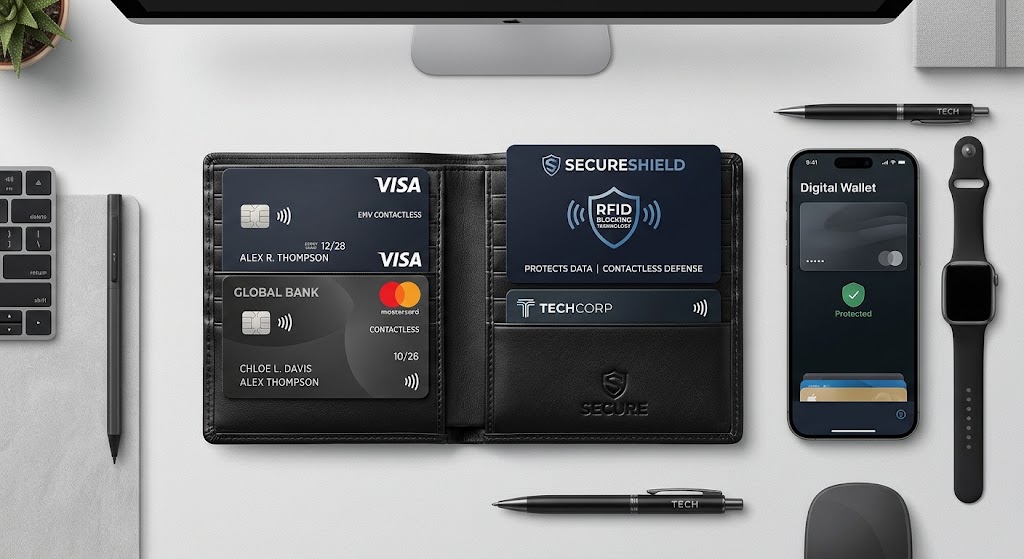
How to Choose the Best RFID Card Blocker: 5 Steps
Follow these steps before buying an RFID privacy card for personal use or business distribution.
1. Identify the cards you carry. Determine whether your payment cards or access cards use contactless RFID or NFC technology. Do not assume every card uses the same frequency.
2. Check the required frequency range. Ask the supplier whether the blocking card has been tested against the specific frequencies relevant to your use case, including 125 kHz, 13.56 MHz, or UHF where applicable.
3. Request test evidence. Look for documented test conditions, reader specifications, card placement, and measured results. Ask whether independent laboratory testing is available.
4. Confirm size and material. Compare the listed 86 × 54 mm dimensions with your wallet or card holder. Discuss PVC, PET, PPS, and custom options with the manufacturer.
5. Verify the order details. Request a sample if appropriate, confirm pricing and delivery terms, and establish the applicable quality-control requirements before committing to a bulk order.
These checks help you distinguish a suitable privacy product from a card whose protection claims have not been adequately verified.
Where Can You Use an RFID Blocking Card?
An RFID blocking card may be useful in several everyday and commercial situations, provided its performance matches the intended application.
- Travel wallets: Add a compatible blocking product alongside contactless payment cards when travelling.
- Everyday wallets: Consider a card-format option if you prefer not to use individual protective sleeves.
- Corporate gifts: Explore customized products for employee gifts or branded promotional campaigns.
- Retail and distribution: Ask about material choices, packaging, branding, and bulk-order arrangements when sourcing products for resale.
Remember that an RFID blocker does not prevent every form of payment fraud, account compromise, or unauthorized access. It should complement, rather than replace, standard account security practices.
Frequently Asked Questions
1. Does an RFID card blocker work with every credit card?
No. Compatibility depends on the card technology, operating frequency, reader, and blocker design. Request test evidence for the specific frequencies and conditions relevant to your cards.
2. What is the best RFID card blocker for a wallet?
The best choice is one that fits your wallet, suits your intended use, and has documented blocking performance. A standard 86 × 54 mm format may be convenient, but dimensions alone do not establish effectiveness.
3. Can Apmor RFID customize blocking cards for businesses?
Apmor RFID lists customized sizes and multiple material options for its Blocking Card. Contact the company to confirm available branding, order quantities, samples, lead times, and testing documentation for your specific requirements.
Conclusion
Choosing the best rfid card blocker requires more than comparing prices or selecting a product with a privacy-focused name. You should verify blocking performance, match the product to your cards’ frequencies, assess material and size requirements, and obtain clear technical documentation before purchasing.
Apmor RFID Technology Co., Ltd. offers a Blocking Card listed in an 86 × 54 mm format, with PVC, PET, PPS, and customization options indicated in its product information. Confirm the blocking-specific test results and final specifications with the manufacturer to determine whether the product meets your requirements.
Looking for an RFID blocking card for personal use, branded distribution, or bulk procurement? Contact Apmor RFID through its official Blocking Card product page to discuss your application, request technical documentation, and confirm customization and quotation details.

Add comment