
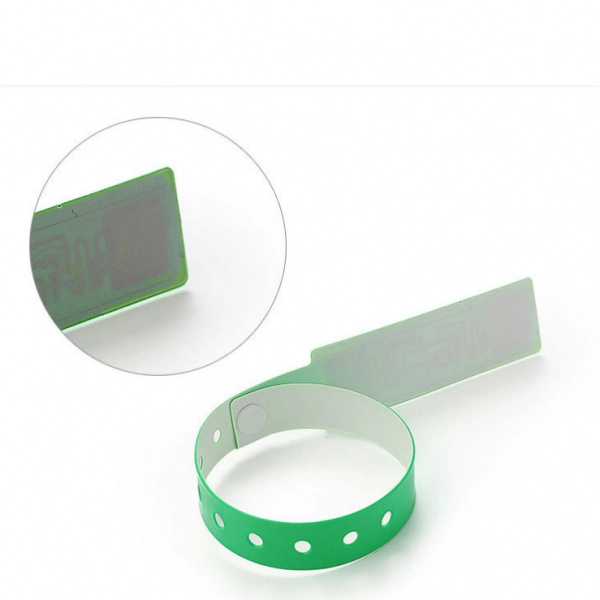
RFID wristbands for access control help you manage entry, identify registered visitors, and organize access across busy venues without relying entirely on printed tickets or manual checks. However, choosing the wrong wristband can create compatibility issues, slow down entry, and increase replacement costs. You need a solution that fits your access control system, operating environment, and visitor management process.
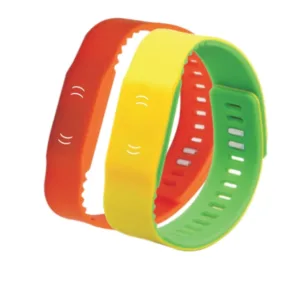
Apmor RFID Technology Co., Ltd. specializes in RFID tags and smart cards, offering customizable products for different industry applications. Its UHF PVC wristband measures 250 × 32 mm and supports customized colors and printing options. Before placing an order, you should evaluate the chip frequency, reader compatibility, wristband durability, and the requirements of your existing access control infrastructure.
How RFID Wristbands for Access Control Work
RFID wristbands use radio-frequency identification technology to exchange data with a compatible reader. When a visitor presents a wristband, the system reads its identifier or stored data and checks the relevant access permissions.
For example, a theme park can assign wristbands to ticket holders and configure its access control software to determine which entrances or attractions they can use. Similarly, a swimming pool can use registered wristbands to identify members and manage entry through designated gates.
The complete system typically includes:
- RFID wristbands: Wearable tags that carry compatible RFID chips.
- RFID readers: Devices that communicate with the wristbands.
- Access control software: Software that checks permissions and records transactions when configured to do so.
- Entry equipment: Turnstiles, electronic locks, or access gates connected to the system.
The wristband itself does not automatically control a door. You need compatible hardware and software to validate credentials and enforce access rules.
Key Features of Apmor RFID PVC Wristbands
Apmor RFID provides customizable RFID products for business applications. Its PVC wristband offers several specifications worth considering when planning an access control project.
Product Specifications
| Feature | Available details |
|---|---|
| Product type | UHF PVC Wristband |
| Material | PVC |
| Dimensions | 250 × 32 mm |
| Chip option | UHF chip, as listed |
| Memory | Listed options include 128 bytes, 144 bytes, and 1 KB |
| Customization | Color and printing according to requirements |
| Printing options | Silk-screen printing, QR codes, and barcodes |
| Listed operating temperature | -30°C to +70°C |
| Listed read range | 1–10 cm, depending on tag size and reader power |
These specifications provide a starting point for product evaluation. However, the listed frequency is 13.56 MHz, which is generally associated with HF RFID rather than UHF RFID. You should confirm the actual chip frequency, memory configuration, and tested read range with Apmor RFID before ordering.

Customization for Different Environments
Your wristband requirements may vary according to how visitors enter and move through your facility. Apmor RFID offers customization options that can help align wristbands with your operational requirements.
Consider these factors when requesting a quotation:
- Identification: Add a logo, printed information, barcode, or QR code where appropriate.
- System compatibility: Match the chip type and frequency to your existing readers.
- Operating conditions: Check temperature, moisture exposure, and expected wear.
- Order requirements: Confirm colors, quantities, artwork, packaging, and production lead time.
Where RFID Access Control Wristbands Are Used
Different industries use RFID wristbands to organize entry and improve visitor management.
Swimming Pools and Water Parks
Swimming facilities can issue wristbands to members or visitors and connect them with access permissions. Depending on the system, operators may also integrate lockers or other authorized services.
For these applications, confirm the wristband’s water resistance and compatibility with the reader before purchasing. A PVC material specification alone does not establish a waterproof rating.
Theme Parks and Events
Theme parks, festivals, concerts, and exhibitions often manage large numbers of visitors within limited entry periods. RFID wristbands can support credential checks and help staff distinguish between ticket categories when the access system is configured accordingly.
Membership and Institutional Facilities
Gyms, clubs, and selected healthcare facilities can use registered wristbands for member identification or authorized access. The system design should account for privacy, credential management, and the different permissions assigned to each user group.
How to Choose the Right RFID Wristband
Follow these steps before selecting a product for your project.
- Define your application. Identify the entrances, users, and activities the wristband must support.
- Check reader compatibility. Confirm whether your equipment requires LF, HF (13.56 MHz), or UHF RFID. Do not rely on the product name alone.
- Set the required specifications. Determine material, dimensions, chip type, memory, printing, and environmental requirements.
- Test a sample. Evaluate reading performance with your actual reader and software under realistic operating conditions.
- Confirm commercial details. Request pricing based on quantity, customization, packaging, delivery location, and production schedule.
This process helps you identify potential compatibility problems before committing to a large order.
FAQ
1. Can RFID wristbands replace traditional access cards?
They can replace cards in compatible systems when the wristband chip and reader support the same technology and credential format. You may need to update system settings or hardware before implementation.
2. Are PVC RFID wristbands suitable for swimming pools?
They may be suitable, depending on the product’s construction and tested water resistance. Ask the supplier to confirm the required protection level and performance under repeated exposure to water and cleaning products.
3. Can Apmor RFID customize wristbands for access control?
Apmor RFID lists customizable colors and printing options, including silk-screen printing, QR codes, and barcodes. Contact the company to confirm available chip configurations, minimum order quantities, samples, and compatibility with your access control system.
Conclusion
Choosing RFID wristbands for access control requires more than selecting a wearable tag. You need to match the chip frequency, reader, software, material, and customization options to your operational requirements. Apmor RFID Technology Co., Ltd. offers customizable PVC RFID wristbands for consideration across event management, swimming facilities, theme parks, and membership applications. Verify the technical specifications and test a sample before finalizing your purchase.
Contact Apmor RFID for Your Project
Share your application, existing reader model, required chip frequency, estimated order quantity, and customization requirements with Apmor RFID. Request a technical specification sheet and sample so you can evaluate compatibility and performance before placing a bulk order.



Add comment