
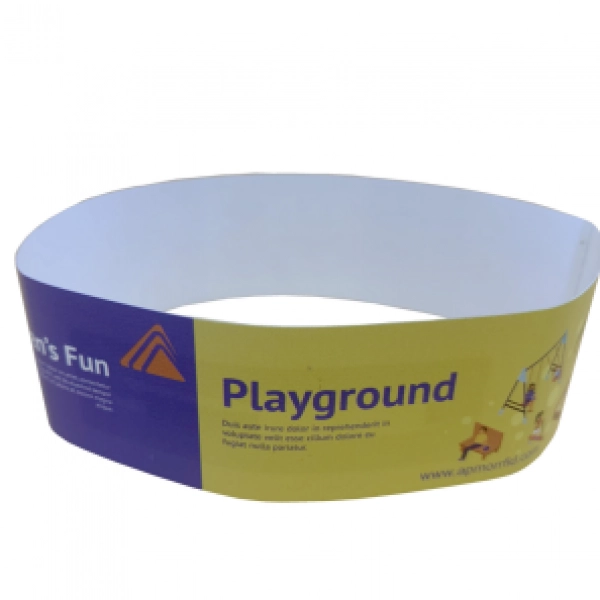
If you manage a busy music festival, controlling entry, reducing ticket fraud, and moving thousands of visitors through checkpoints can become difficult. RFID wristbands at music festivals give you a practical way to connect physical wristbands with digital identification and access systems. Instead of relying only on printed tickets, you can use RFID technology to identify attendees quickly and support different access levels. For organizers, the right wristband should also balance durability, comfort, printing quality, chip compatibility, and cost. Apmor RFID Technology provides customizable PP synthetic wristbands designed for event, festival, park, and other identification applications.
Why Use RFID Wristbands at Music Festivals?
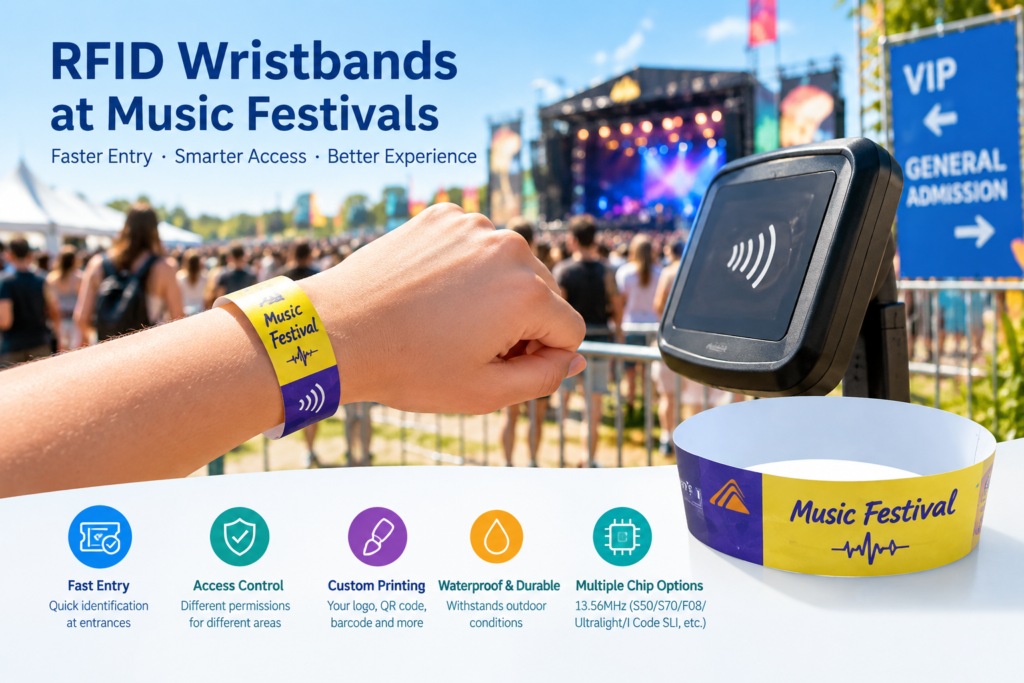
Music festivals often have several access areas, including general admission, VIP zones, backstage areas, camping entrances, and staff-only facilities. A properly configured RFID wristband can help you associate each attendee with a specific access permission.
For example, you can assign different RFID credentials to general admission and VIP visitors. Staff can then use compatible RFID readers at controlled entry points to verify the wristband before allowing access.
Common benefits include:
- Faster attendee identification at entrances
- Support for different access permissions
- Custom printing for branding and identification
- Integration with RFID or NFC-based systems
- Reduced dependence on traditional paper tickets
- Disposable options for short-term events
For organizers searching for custom RFID wristbands for music festivals, material and chip selection are particularly important because outdoor events can expose wristbands to water, heat, friction, and repeated handling.
Choosing the Right RFID Festival Wristband
Not every event requires the same RFID wristband. You should consider the event duration, reader system, operating environment, required chip technology, and printing requirements before placing an order.
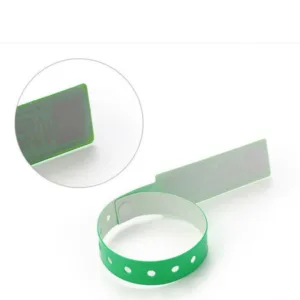
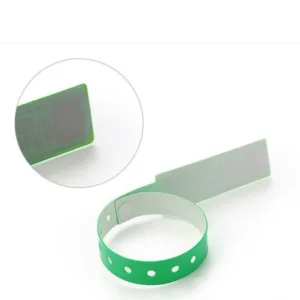
Apmor’s PP Synthetic Wristband measures 250 × 25 mm and uses PP synthetic paper. The product can support several 13.56 MHz chip options, including S50, S70, F08, Ultralight, and I Code SLI series.
The wristband also supports silk-screen logo printing, numbers, URLs, barcodes, and QR codes. Its listed operating temperature is -20°C to 70°C, while the specified reading range varies according to the tag size and reader power.
PP RFID Wristbands vs. Traditional Event Wristbands
| Feature | PP RFID Wristband | Traditional Paper Wristband |
|---|---|---|
| RFID identification | Available | Usually unavailable |
| QR/barcode printing | Available | Available |
| Custom branding | Available | Available |
| Access management | Supports RFID systems | Mainly visual checking |
| Chip options | Multiple 13.56 MHz options | None |
| Short-term event use | Suitable | Suitable |
| Digital identification | Supported | Limited |
If your festival requires RFID-based access control, a waterproof RFID wristband for festivals or other durable material option can be considered according to the actual environment and reader configuration.
How to Select RFID Event Wristbands
Before ordering your RFID festival wristbands, follow these steps:
- Define your event requirements.
Identify the number of attendees, event duration, entry points, VIP areas, staff zones, and other controlled locations. - Confirm your RFID technology.
Check whether your existing readers require ISO14443A, ISO15693, NFC-compatible, or another specific chip configuration. - Choose the wristband material.
PP synthetic paper can be suitable for disposable event applications where you need printed identification and RFID functionality. - Select printing and coding options.
You can add logos, serial numbers, URLs, barcodes, or QR codes based on your ticketing and identification workflow. - Confirm the read range.
The listed product specifications indicate approximately 1–10 cm, depending on tag size and reader power. Test the wristband with your actual reader before mass production. - Request customization.
Provide Apmor with your required size, chip, artwork, quantity, and application scenario so the product configuration can match your event system.
Where Can RFID Wristbands Be Used?
Although music festival RFID wristbands are a key application, the same product concept can support various identification scenarios.
Music Festivals and Concerts
You can use RFID wristbands for attendee identification, controlled entrances, VIP access, and event credentialing.
Water Parks and Recreation Facilities
The wristband format provides a wearable identification method for visitors who need access to specific facilities.
Hospitals and Mother-Baby Care
Apmor’s product information lists hospital mother-and-baby care among its applications, where RFID identification can support identity matching and tracking workflows.
Outdoor and Humid Environments
The product specifications list an operating temperature of -20°C to 70°C and applications involving humid working environments. You should still validate environmental performance against your specific event conditions before deployment.
Why Work With Apmor RFID?
Apmor RFID Technology was founded on October 24, 2022, and focuses on RFID labels and smart cards. The company reports a team of 50+ people, serves customers in 10+ countries, and provides customized products, technical support, global supply chain management, and after-sales service.
Its Shenzhen office is located in Longhua District, Shenzhen, China. For buyers looking for an RFID wristband manufacturer, these company details provide useful supplier background when evaluating a potential custom production partner.
Apmor also offers other RFID products, including RFID inlays and labels, RFID laundry tags, RFID on-metal labels, RFID keyfobs and tokens, RFID windshield tags, and RFID non-standard cards.
FAQ
1. Can RFID wristbands be customized for music festivals?
Yes. Apmor’s PP wristband supports customized printing, including logos, numbers, URLs, barcodes, and QR codes. You can also select compatible chip configurations according to your RFID system.
2. What chips can be used in these RFID wristbands?
The listed 13.56 MHz options include S50, S70, F08, Ultralight, and I Code SLI series. You should confirm chip compatibility with your existing reader before ordering.
3. How far can an RFID wristband be read?
The listed read range is approximately 1–10 cm, while the product table specifies 2–5 cm for ISO14443A and 2–8 cm for ISO15693. Actual performance depends on the wristband, tag size, reader, and installation environment.
Conclusion
When you evaluate RFID wristbands at music festivals, focus on more than the printed appearance. Your choice should match your RFID reader, access-control workflow, event environment, chip requirements, and branding needs. With a 250 × 25 mm PP synthetic wristband, multiple 13.56 MHz chip options, and support for custom printing, Apmor RFID Technology can provide a configurable option for festival and event identification applications.
CTA
Planning a music festival, concert, park, or ticketed event? Contact Apmor RFID with your required quantity, wristband size, chip type, artwork, and application scenario. The team can help you confirm a suitable RFID wristband configuration and provide a customized quotation.



Add comment